
Joe Arnao & Real Estate Coaching: Leverage, Brokerage Fit & Building a Business That Actually Works
Joe Arnao didn't open our conversation on Why Do I Suck as a Real Estate Agent? with a sales pitch or a success story. He opened it with a mirror: most agents who are struggling have never figured out their own superpowers, and that's where the spiral starts.
Joe's spent more than 20 years inside brokerage models from national franchises to his own three-state operation, and now delivers real estate coaching and consulting out of North Carolina. When someone with that range of experience tells you the problem isn't strategy, it's identity, you pay attention.
This episode covers why agents get stuck, how to choose a brokerage that actually fits, and the specific leverage and systems that separate agents who grind endlessly from agents who actually scale.
To dive deeper into Joe’s coaching philosophy and learn how to identify your own professional superpowers, connect with him on Facebook, LinkedIn, and Instagram.
Who Is Joe Arnao?
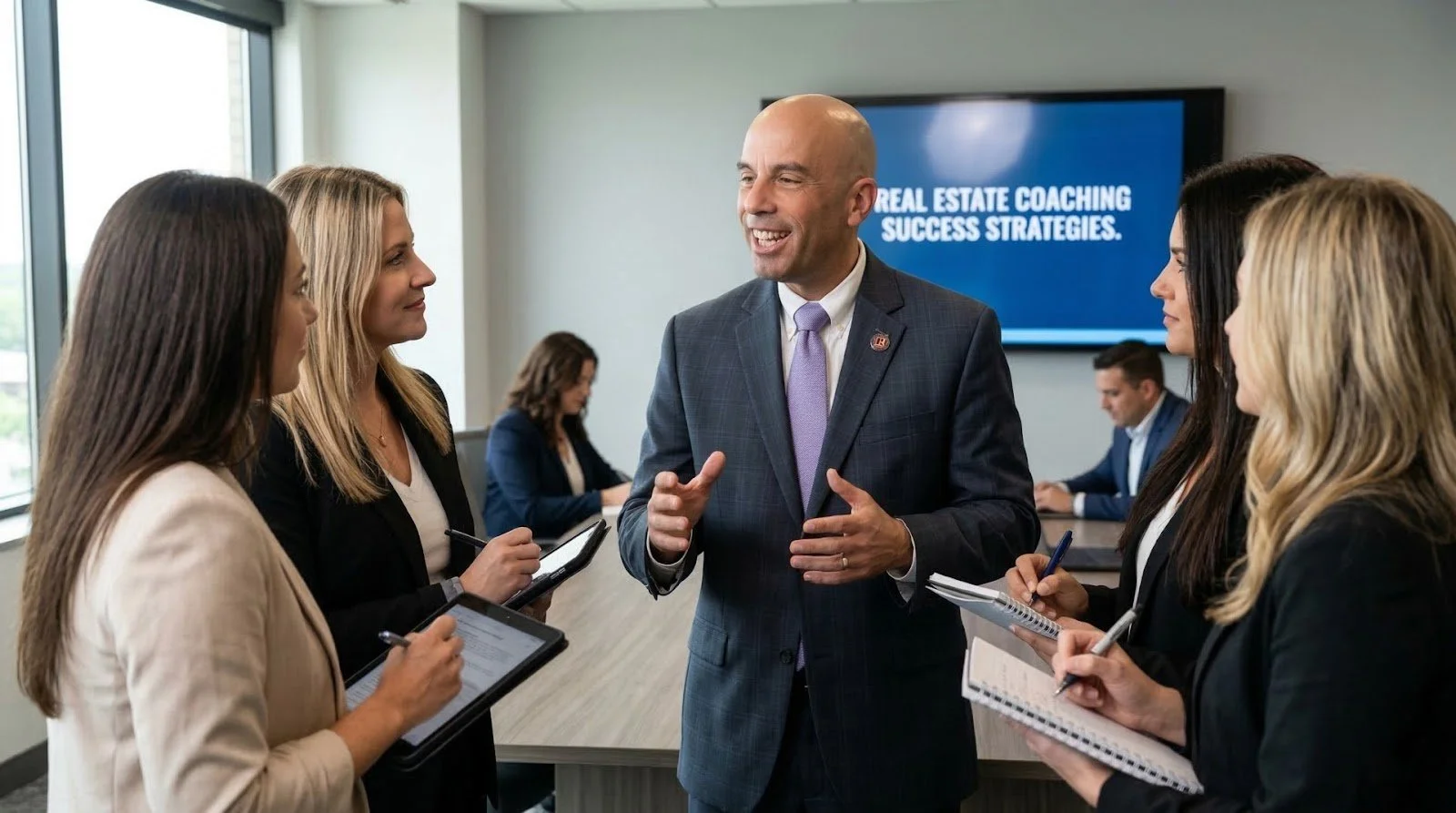
Joe runs 4W Strategic Consulting out of Wake Forest, North Carolina, offering coaching, consulting, and strategic advisory services for agents and brokerages. His path into the industry started in IT recruiting. His father-in-law was developing properties but farming out every listing and paying heavy fees to find new projects. Joe studied the business, saw the gap, and built an in-house brokerage to keep more revenue inside the company.
From there he opened offices in three states, ran a boutique, joined a national franchise, and spent years inside a regional luxury firm. That exposure across wildly different brokerage models is what defines Joe Arnao real estate coaching today. Joe shares more of this thinking on Instagram regularly, and it's clear his advice doesn't come from a single vantage point.
The #1 Reason Real Estate Agents Fail
I asked Joe the question everyone watching this show asks themselves: why do agents fail? His answer skipped right past strategy and landed on something deeper.
"They don't know how to find their own superpowers. They are being told how to do the business in a certain way that doesn't fit who they are. They are struggling to do something that is not natural. It doesn't feel right, and you can't fake this business. The 'fake it till you make it' approach doesn't really work. Agents need to know who they are and listen to the right people."
That resonated with me. I run Take Action Realty Group, a medium-to-large boutique brokerage with about 13 agents, and I've watched new licensees walk in the door already parroting strategies that don't match their personality. They saw someone's Instagram reel, assumed that's the playbook, and never questioned whether it fits who they actually are. That's why real estate agents fail more often than most people realize.
[ Follow Take Action Realty Group on LinkedIn]
You Didn't Get a Job — You Opened a Business
Joe put it plainly: too many agents enter real estate thinking they just landed a great position. They've seen it on TV or watched a friend close a deal and figured the checks just show up. That real estate entrepreneur mindset gap is the fault line, and year-one failure rates among new agents have nearly doubled since 2020, reflecting that mismatch clearly.
When someone expects leads, structure, and a steady paycheck but gets a 1099 and a desk, frustration builds fast. Joe and I talked about this being a fine line between W2 and 1099, and he's right. Treating this like your own company from day one is the only way the math works long-term.
Choosing the Right Brokerage (What Agents SHOULD Ask)
Splits are the first thing most agents ask about during a brokerage interview. Joe thinks that's the wrong starting point. Whether it's 80/20 or 60/40 won't matter if you aren't set up for success two or three years down the road.
Here's what agents should actually be asking:
How will you help me discover my business model?
What tools, education, and mentorship do you provide?
Who do I lean on when I'm stuck, and how accessible is leadership?
Is there backend support like a transaction coordinator?
What does my growth path look like if I succeed?
If I'm struggling, will you help me adjust my approach?
Joe laid out his full answer on the show, and it's worth hearing in his own words.
“It’s not always about what the brokerage can do for the agent; it’s about how I can level myself up to grow. Most new agents don’t think that far through. Ask about systems and back-end support. Am I doing all my own paperwork, or is there a transaction coordinator? Do you encourage team building? If I do well, what is my growth path? If I’m struggling, will you help me figure out a different model, or do I just have to quit?”
Knowing how to choose the right brokerage starts with asking the questions most agents skip entirely. If you're looking for more conversations like this one, our podcast network features dozens of shows where brokers and agents break down what separates a good brokerage from a dead-end one.
Survival Mode vs Scale Mode
Joe identifies a clear turning point that most agents hit somewhere between 12 and 18 months in the business. The shift happens when they stop doing everything themselves and discover leverage.
| Survival Mode | Scale Mode | |
|---|---|---|
| Paperwork | Agent does everything | Transaction coordinator handles it |
| Marketing | Manual, inconsistent | Automated and on-brand |
| CRM | Barely used | Active, intelligent, driving follow-ups |
| Time spent | Behind a desk | Out in front of people |
| Revenue focus | Scattered across tasks | Conversations and relationships |
The difference between these two columns has nothing to do with talent and everything to do with systems. Agents stuck in survival mode lose hours every week to tasks that could be delegated, and those hours cost them the conversations that actually produce income. Our VIP perks and events program at Take Action Realty Group was built to help agents stay on the scale side of that equation.
Leverage = Time in Front of People
Joe was emphatic about what actually produces revenue in this business, and the answer, while straightforward, is one most agents resist.
“When they figure out that leverage is important and allow a transaction coordinator to support them, things change. By leverage, I mean allowing a person or a system to do the work that isn’t making money. When they hit that stride, they aren’t wasting three hours a week on paperwork. They are out in front of people, negotiating, on the phones, and building relationships. The sooner an agent understands that their money is in speaking with people, about anything, not just real estate, the better.”
Real estate leverage explained in one sentence: move every task that doesn't directly produce income off your plate. I've watched agents in my own brokerage double their closings in a single quarter by hiring a TC and reclaiming those hours for prospecting. We built Selling Wisconsin on ADTV on the same principle: agents stay visible through content without it eating their calendar.
Systems That Actually Scale
Joe broke down the tech stack that matters into three categories.
CRM (one you actually use) - Modern platforms log notes automatically, summarize calls, and recommend follow-up timing based on the conversation itself. If you're still managing contacts in a spreadsheet, you're losing deals. Choosing the right CRM starts with finding a tool that matches how you work, then committing to it daily.
Automated marketing - Joe told me he doesn't even write his own content anymore. The tools know his voice, use his language, and create images and text that match his brand every time. Agents should build that infrastructure so their time stays focused on people.
Transaction management - A TC keeps you organized, professional, and free to prospect. Industry data on agent productivity consistently shows that agents who delegate administrative work outperform those who don't.
Burnout & The Four W Framework
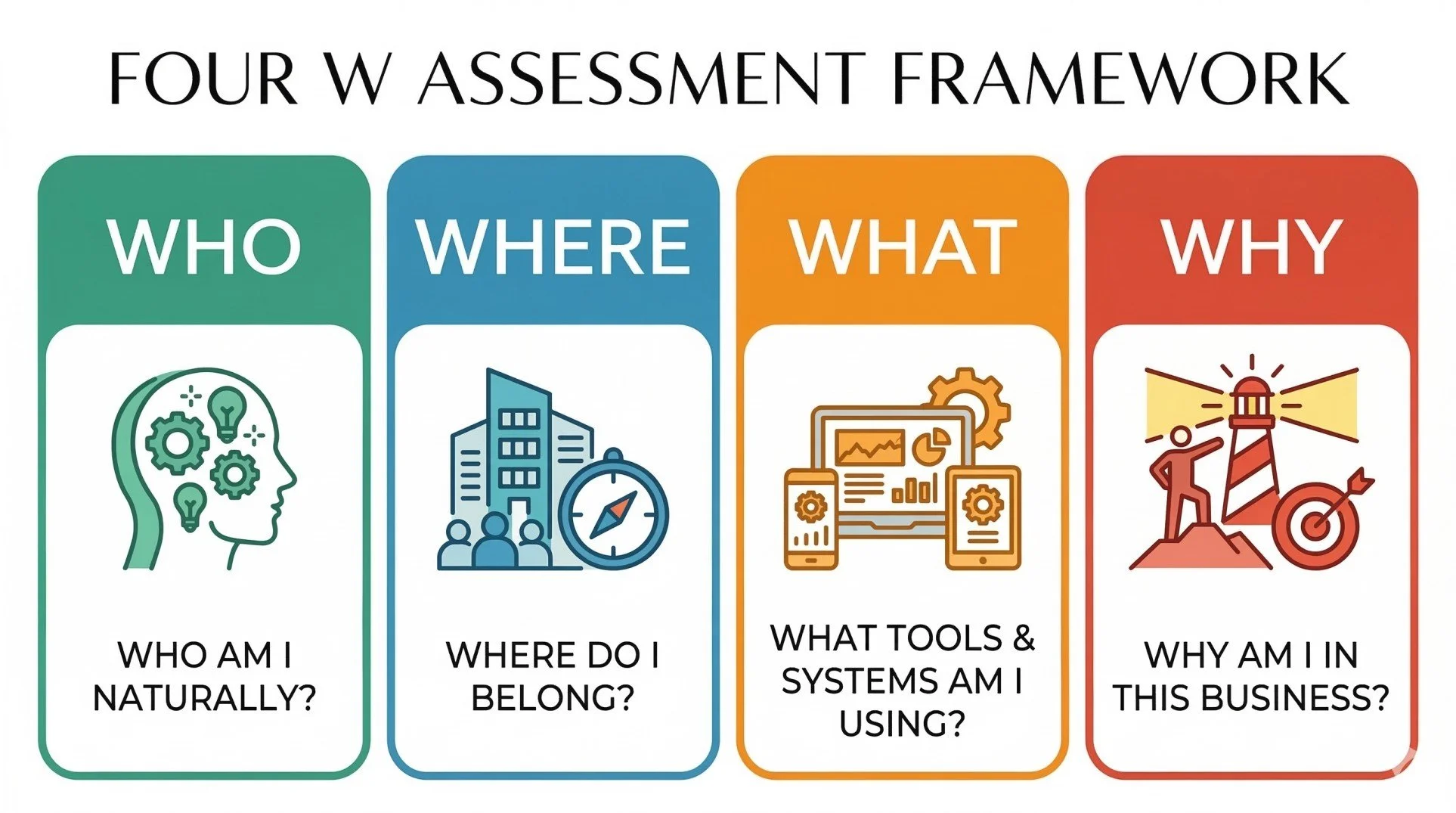
Burnout is everywhere right now. Agents working 80-hour weeks, running on a treadmill, going nowhere. Joe built a proprietary tool through 4W Strategic Consulting called the Four W Assessment to address exactly this problem:
Who am I naturally?
Where do I belong (brokerage, environment, social circle)?
What tools and systems am I using?
Why am I in this business?
“You can make money at a coffee shop, on a baseball team, or at church. It’s about figuring out: Who am I? Where do I belong, brokerage-wise and who I’m hanging around with? What tools am I using? And the biggest one: Why am I in this business? If you don’t have a strong ‘why’ or a vision, this grind becomes very difficult.”
That last W is the one most agents skip. They jump into production without ever defining what they're building toward. Avoiding the grind that breaks most agents starts with anchoring everything to a purpose bigger than the next commission check.
Coaching vs Training
Joe draws a sharp line between these two concepts. Training teaches you the mechanics of doing real estate, and you need it when you're starting out. Coaching digs into why you're stuck, and you need it when you're committed to the business, working hard, and failing to gain traction.
When to hire a real estate coach comes down to timing. Joe's advice: don't spend money on coaching until you've committed to staying in the industry and you've proven you'll put in the work. Once you're at that stage and results still aren't matching effort, a coach earns their fee.
Joe Arnao's real estate coaching approach is Socratic, built around helping agents identify their own path and get out of their own way. That distinction matters because the best coach for one agent might be the worst fit for another, and the only way to know is to understand how that coach's methodology aligns with how you want to build your business. We cover these topics regularly on our blog, where agents share what's working in practice.
Stop Blaming the Brokerage
One of Joe's strongest warnings: agents who switch brokerages thinking the move will fix everything usually carry the same problems to the new office. If the mindset and systems don't change, the scenery won't matter.
Before making a move, look inward first. The heavy lift most agents avoid is usually simpler than they want to admit: the phone, cold calling, consistently showing up where people are. Joe says agents often chase a quick fix that actually took someone else years to build.
Final Advice for Agents Who Feel Like They Suck
Joe's closing advice was as direct as the rest of the conversation.
“Grab a mirror. Look at yourself and ask: ‘Why do I suck? What am I doing wrong?’ Don’t blame the brokerage first. Figure out what is inside you that isn’t working. What is the ‘heavy lift’ you don’t want to do anymore? Often, people blame the brokerage, move elsewhere, and just carry the same problems with them. Study what you really hate about the business.”
Most agents who feel stuck aren't lacking ability. They're chasing someone else's playbook without asking whether it fits them, seeing where a successful agent is now without seeing the years that person spent getting there. Comparison kills traction faster than any bad market.
Joe's free Four W Assessment at the4wassessment.com measures where you are and where you could go, with instant results and a complimentary overview session. If you're serious about figuring out your own path in this business, that assessment is the place to start.
Frequently Asked Questions
Who is Joe Arnao?
Joe is a coaching and consulting professional with more than 20 years of experience across multiple brokerage models, including national franchises, boutique firms, and regional luxury brands. He's based in Wake Forest, North Carolina.
What is 4W Strategic Consulting?
It's Joe's firm, based in Wake Forest, North Carolina. The company provides coaching, strategic guidance, and brokerage consulting built around the Four W framework (Who, Where, What, Why).
Why do most real estate agents fail?
According to Joe, agents fail because they try to operate in a model that doesn't fit their natural strengths. They follow someone else's playbook and burn out trying to force a system that doesn't match who they are.
How do you choose the right brokerage?
Ask how the brokerage will help you grow your business, what support and mentorship structures exist, how accessible leadership is, and whether they'll help you adjust your model if you struggle.
What does leverage mean in real estate?
Leverage means delegating non-income-producing tasks like paperwork, manual marketing, and admin so you can spend time on conversations, relationships, and negotiations that generate revenue.
When should a Realtor hire a coach?
When you've committed to staying in the business and you're putting in the work but still can't gain traction on your own.
What systems help agents scale?
A CRM you actually use, automated marketing tools, and a transaction coordinator. Joe identifies these three as the foundation for moving from survival mode to scale mode in real estate.
How do you avoid burnout in real estate?
Align your business model with your personality, define your "why," build systems that free your time, and stop copying strategies that don't fit who you are. Joe's Four W Assessment helps agents diagnose exactly where the misalignment is.
What is the Four W Assessment?
A free proprietary evaluation from 4W Strategic Consulting that measures Who you are, Where you belong, What tools you need, and Why you're in the business. Results are instant and include a complimentary 15-minute overview with Joe.
What's the difference between coaching and training?
Training teaches the mechanics of real estate when you're starting out. Coaching helps you identify and overcome the specific barriers keeping you from results when you're already putting in the effort.
This podcast is produced by the Icons of Real Estate - #1 Real Estate Podcast Network
Apply to Be a Guest on Why Do I Suck as a Real Estate Agent? Podcast
Most agents who are struggling have never stopped to figure out their own superpowers, and that's exactly the kind of conversation we have on this show. Whether you've cracked the code on leverage, built systems that pulled you out of survival mode, or learned the hard way how to pick a brokerage that actually fits, your experience could be the thing that keeps another agent from burning out. If you've been through the grind and come out the other side with something worth sharing, we want to hear from you.
