
Jared Jones Real Estate Development and the Future of Workforce Housing
Real estate agents are often told to "invest in property" to build wealth. But for many, the path from agent to investor feels blocked by high costs and a lack of construction knowledge.
In a recent episode of the Why Do I Suck As a Real Estate Agent podcast, I sat down with Jared Jones, a real estate developer, investor, and co-founder of Middle Housing Partners, to break down exactly how agents can bridge that gap.
Here’s a snippet of our conversation: https://www.youtube.com/shorts/ApD40JNZ1pg
We discussed his journey from lending to flipping homes, and how he now focuses on solving California's housing crisis through missing-middle development.
For any agent feeling stuck, this conversation offers a clear roadmap to understanding renovations, working with investors, and ultimately building a career that transcends traditional commissions.
You can learn more about Jared Jones real estate developer Middle Housing Partners on the Middle Housing Partners website or follow him on Instagram.
Listen to the full episode here:
Jared Jones’ Journey Into Real Estate Investing
Jared's entry into real estate wasn't through a love of architecture or sales. It started with a simple goal.
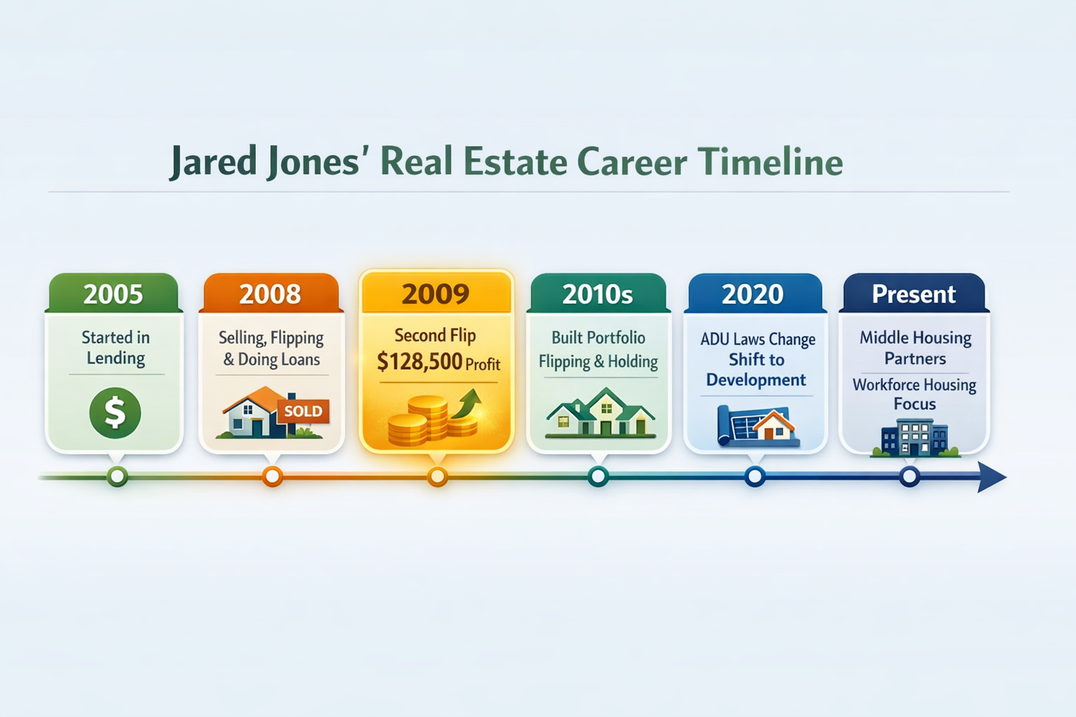
“I got into lending because I heard about a 27-year-old making $300,000 a year doing it. That sounded like a good job to me. As the market started shifting, I was working with a lot of agents and realized I could probably do a good job at that too. By 2008, I was selling homes, flipping houses, and doing loans.”
He started in lending around 2005. As the market shifted, he was working with a lot of agents and realized he could do that too. This broad foundation gave him a unique perspective. He wasn't just a transaction coordinator; he was a boots-on-the-ground investor who understood the mechanics of a deal from financing to final sale.
The Flip That Changed Everything
Most agents get into the business hoping for a steady stream of commissions. Jared Jones real estate developer Middle Housing Partners got into it hoping for a life-changing moment. He found it on his second flip.
“My portion of the profit on my second flip was $128,500. I’ll never forget that number because at the time it was more money than I had made the entire year before. That’s when I realized this might be the path for me.”
That single deal convinced him that real estate agents investing in property could dramatically accelerate wealth building. It wasn't just about the money; it was about the potential. When you realize that one project can eclipse an entire year's worth of work, your mindset shifts.
Why Real Estate Agents Should Understand Renovations
If you want to stand out to investors, you need to know what a renovation actually costs. You can't guess. You have to know.
“Being able to walk into a house and say it will cost $4,200 to paint or $5,000 for new countertops adds huge value for clients. When you’ve done renovations yourself, your advice carries a lot more weight.”
This knowledge changes the dynamic of a negotiation. If you know the exact cost of repairs, you can confidently advise a client to offer less or justify a price reduction. You become a partner in the transaction rather than just a facilitator. For agents looking to deepen this skill, resources like the California Association of Realtors housing affordability index provide valuable market context.
Developing this level of expertise is exactly what Jared described as essential for working with investors. It’s also a key theme in our guide to building a real estate brand that attracts clients, where we explore how mentorship and authenticity drive long-term success.
What Investor Clients Actually Want From Agents
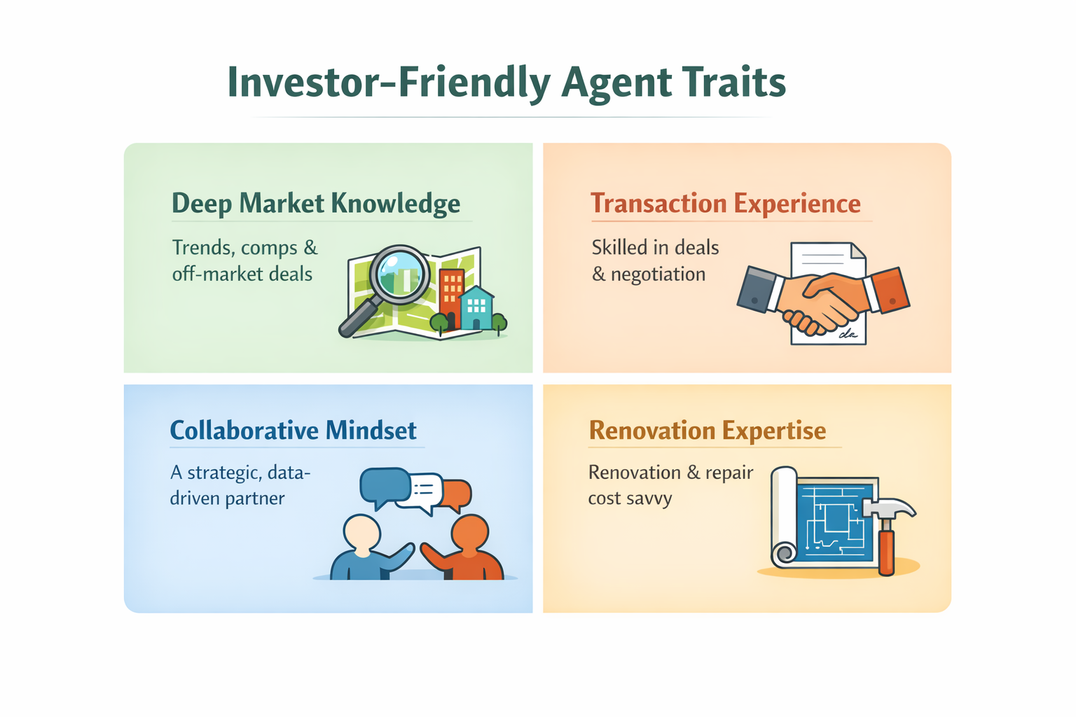
When investors like Jared are looking for an agent, they aren't looking for someone to simply open doors. They are looking for a strategic partner.
“The agent needs to deeply know their market and have experience. When I ask questions, I want answers that go beyond what I can find online. I’m looking for insight based on real transactions.”
Investor clients want collaboration. They want an agent who can push back with data and experience, not just someone who agrees with everything. If you want to attract high-quality investor clients, you must become the expert they can't replace. You need to provide insight based on real estate flipping and development strategy.
Flipping Homes vs Long-Term Investing
One of the biggest questions for any investor is whether to flip a property for quick cash or hold it for long-term appreciation. Jared had a clear rule.
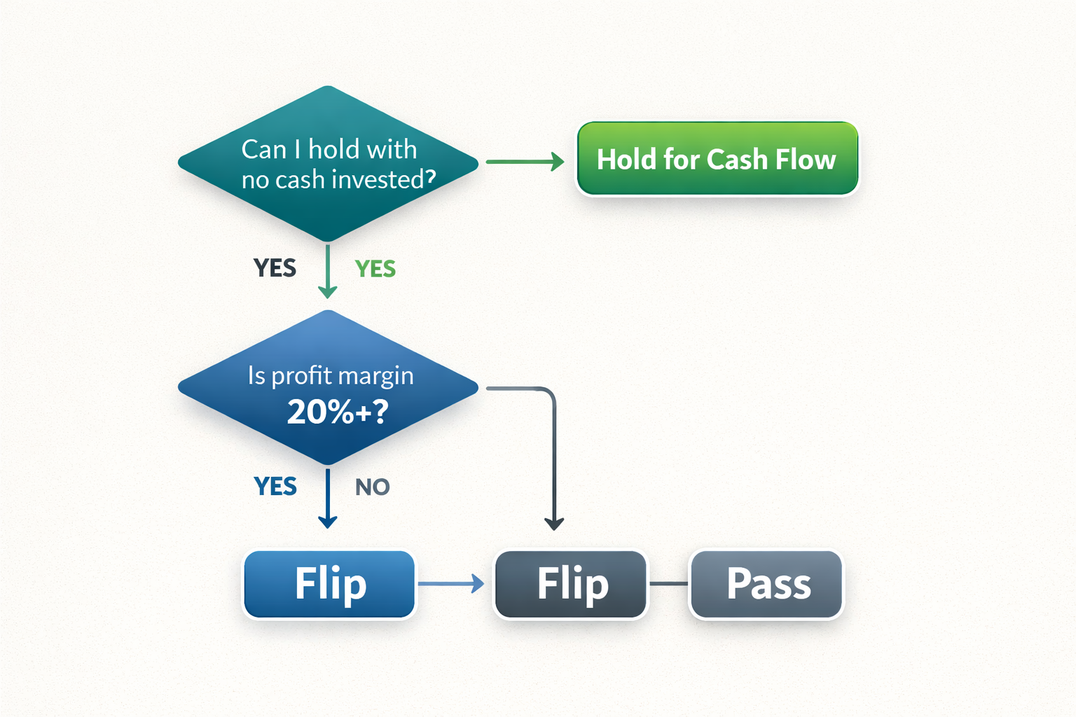
“If I could hold the property with no money invested and still have cash flow left over, I would keep it. If not, but the deal produced a strong margin, then I would flip it.”
This approach allowed him to build a portfolio without draining his cash reserves. By prioritizing cash flow and minimal personal capital investment, he scaled his holdings much faster than if he had simply tried to buy and hold every property.
The Investor's Decision Tree
Why Jared Stopped Flipping Homes
After years of success, Jared and his team made a pivotal decision. They decided to stop flipping houses entirely.
“We eventually decided to stop flipping entirely. Even though it was profitable, development allowed us to make significantly more per deal and scale the business faster.”
For Jared, the opportunity cost of flipping became too high. Every day spent managing a flip was a day not spent on larger development projects offering higher returns. As your business grows, you have to make hard choices about where to focus your energy.
ADU Laws and the Rise of Missing-Middle Housing
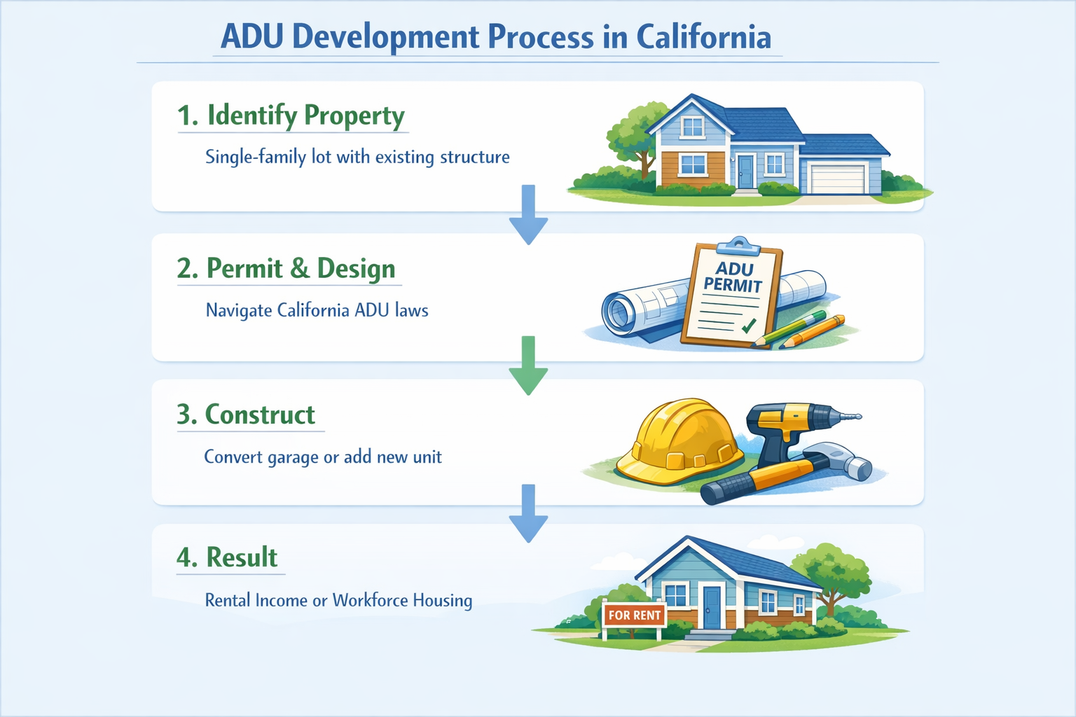
The catalyst for Jared's shift into full-scale development was a change in California law. When the state altered ADU housing development California regulations, he saw an opportunity.
“When California changed the ADU laws, we realized we could convert garages and add units to existing lots. After doing a few of those projects, we realized it was a much bigger opportunity than we initially thought.”
This led to the creation of Middle Housing Partners. The company focuses on "missing-middle" housing—the duplexes, triplexes, and small lot subdivisions that used to be common but have been absent from modern development. For more information on these regulatory changes, the California Department of Housing and Community Development ADU resources page is an excellent reference.
Solving the Workforce Housing Problem
Jared's mission goes beyond profit. He is focused on solving the lack of affordable housing for working families.
“Traditional development builds luxury homes because of the economics. What we’re building are smaller homes that everyday working families can actually afford.”
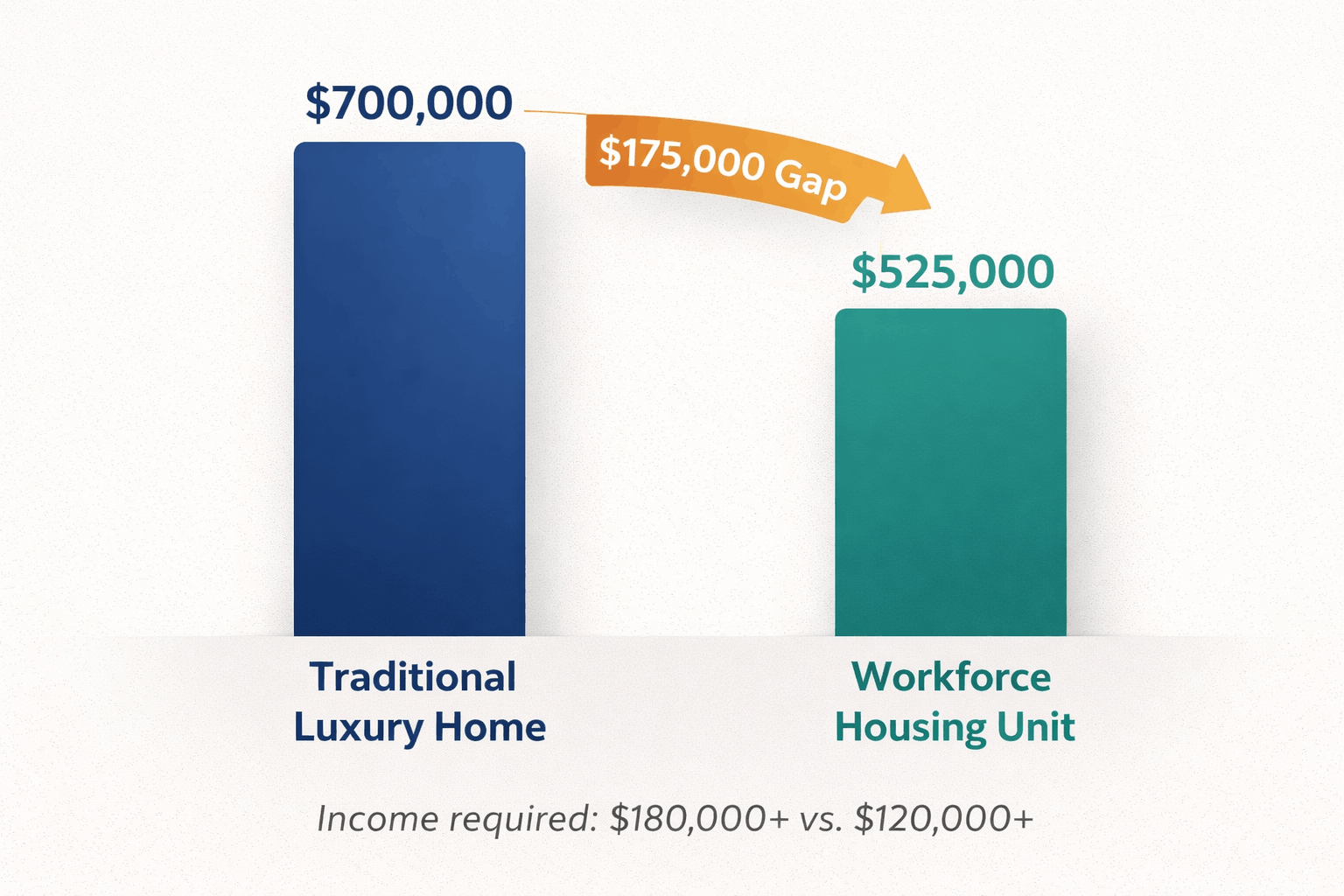
He gave a compelling example. In his market, a standard single-family home might sell for $700,000. Using their development model, Middle Housing Partners can create a new, separate unit that would sell for around $525,000. That $175,000 difference is the gap between needing a $180,000 household income and a $120,000 income.
Workforce Housing Cost Comparison
Why Many Real Estate Agents Struggle to Invest
So why don't more agents take this path? It often comes down to the sheer economics of the market they live in.
“In our market you need to make around $200,000 a year just to afford the median home. Even agents who are doing well sometimes can’t buy their first property.”
It's a frustrating paradox. You sell houses for a living, but you can't afford to buy one yourself. In high-cost areas, the barrier to entry for investing is incredibly high. This is why understanding creative strategies like partnering with investors or finding off-market deals is so crucial.
Advice for Real Estate Agents Who Want to Invest
For agents who feel stuck, Jared's advice is simple: use the tools available to you and find a mentor.
“We live in the age of information. If you’re willing to research and learn how deals work, you can bring opportunities to investors who have money but no time. And mentorship is a cheat code.”
You don't need to have millions in the bank to get started. You need to have knowledge. If you can find the deals, you can find the money to fund them. And if you can find a mentor who has already walked the path, you can compress years of learning into months. You can connect with Jared Jones real estate developer Middle Housing Partners on LinkedIn to see how he and his team operate.
The Bigger Opportunity in Real Estate
I asked Jared for his final message to agents who might be feeling frustrated or wondering if this industry still holds opportunity.
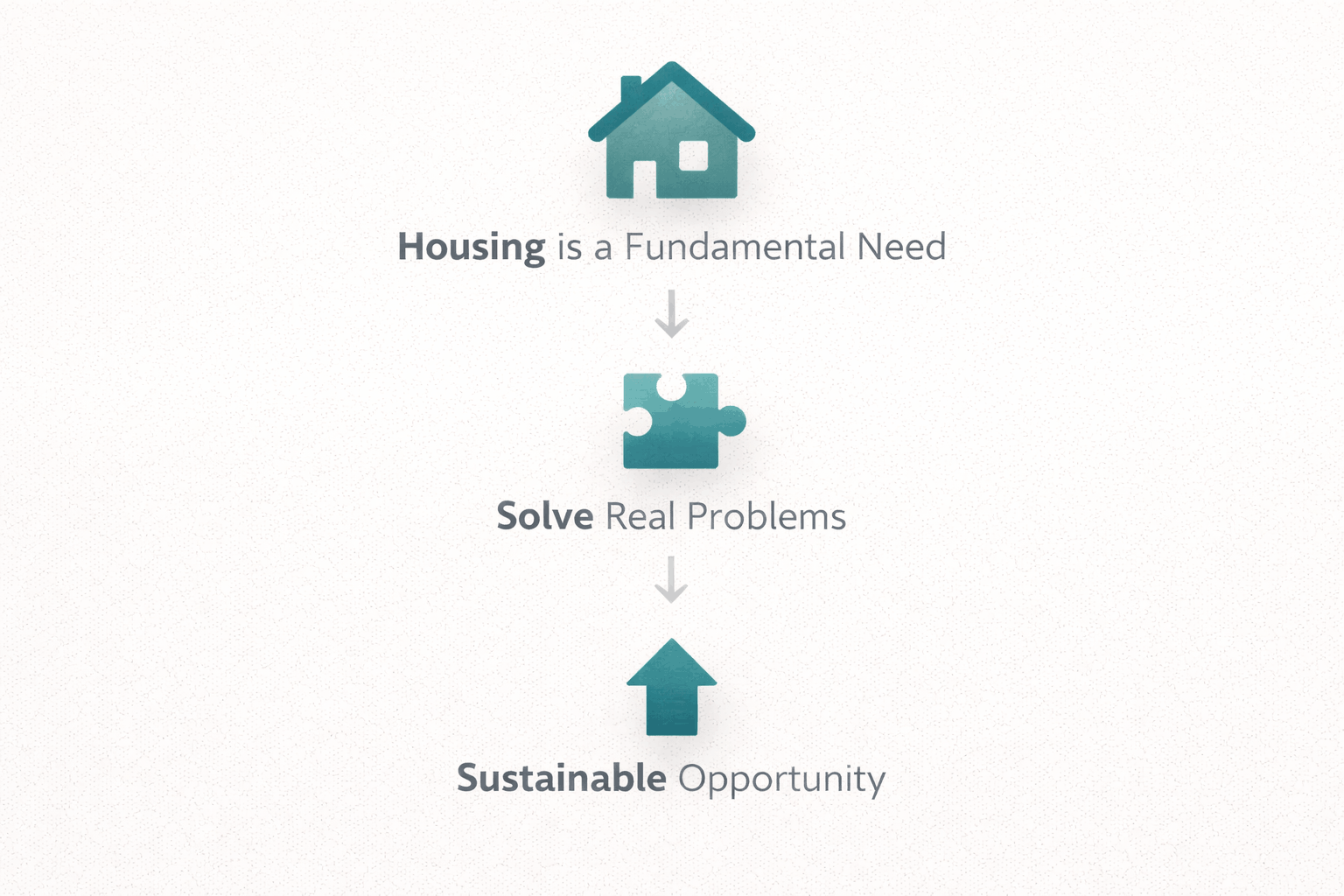
“No matter what happens with technology or AI, people will always need a place to live. If you help people solve that fundamental need, you will always have opportunity in real estate.”
The tools may change. The market may shift. But the core need for shelter is permanent. Whether you are an agent helping a family find their first home, an investor flipping a property, or a developer like Jared Jones creating workforce housing, you are solving the most fundamental human need. That is a business that will never go out of style.
If you are ready to take your career to the next level, start by learning the construction side of the business. At Take Action Realty Group, we help our agents build those skills through hands-on experience and mentorship.
Want to hear my entire conversation with Jared Jones? Tune in to the Why Do I Suck As a Real Estate Agent podcast episode and gain actionable insights straight from a seasoned developer.
FAQ Section
Who is Jared Jones?
Jared Jones is a real estate developer, investor, and co-founder of Middle Housing Partners, a California development firm focused on ADU and missing-middle housing.
What is missing-middle housing?
Missing-middle housing refers to small-scale residential developments such as duplexes, triplexes, and small apartment buildings that fall between single-family homes and large apartment complexes.
What are ADUs in real estate?
ADUs (Accessory Dwelling Units) are secondary housing units built on an existing residential property, such as garage conversions or backyard homes.
Why should real estate agents learn about investing?
Agents who understand renovations, investment strategy, and development can provide better advice to clients and build wealth beyond commissions.
Apply to Be a Guest on the Why Do I Suck As a Real Estate Agent Podcast
Real estate is evolving. Capital is shifting. Markets are tightening. If you are actively working in the industry and solving real problems, whether in construction, finance, brokerage, or development, we would love to hear from you.
*This podcast is produced by the Icons of Real Estate - #1 Real Estate Podcast Network. If you are a real estate professional, apply to be a guest speaker across the network.
