
Andrea Gordon Real Estate Authenticity Branding and Long-Term Success
Authenticity in Real Estate Success
Most agents ask the wrong question. They wonder why they aren't closing deals when they haven't built a foundation that lasts.
In a conversation with Andrea Gordon, a seasoned Bay Area real estate professional, we discussed Andrea Gordon real estate authenticity branding over marketing gimmicks in real estate.
Here’s a preview of this episode: https://youtube.com/shorts/G2MBNCvfB5Y?si=YmxaoGJvXmO7WC-m
We covered how authentic branding creates sustainable success, why follow-up matters more than flash, and what it takes to market yourself when the market turns south.
Andrea's story proves that persistence and genuine connection beat shortcuts every time. You can learn more about Andrea's approach on her website, where she shares additional insights from her decades of experience.
Listen to the full episode:
Andrea Gordon's Unusual Path Into Real Estate
Before Andrea ever showed a house, she worked in theater and advertising. That background taught her something most agents never learn: how to read people and tell a story that matters.
Then came the moment that changed everything.
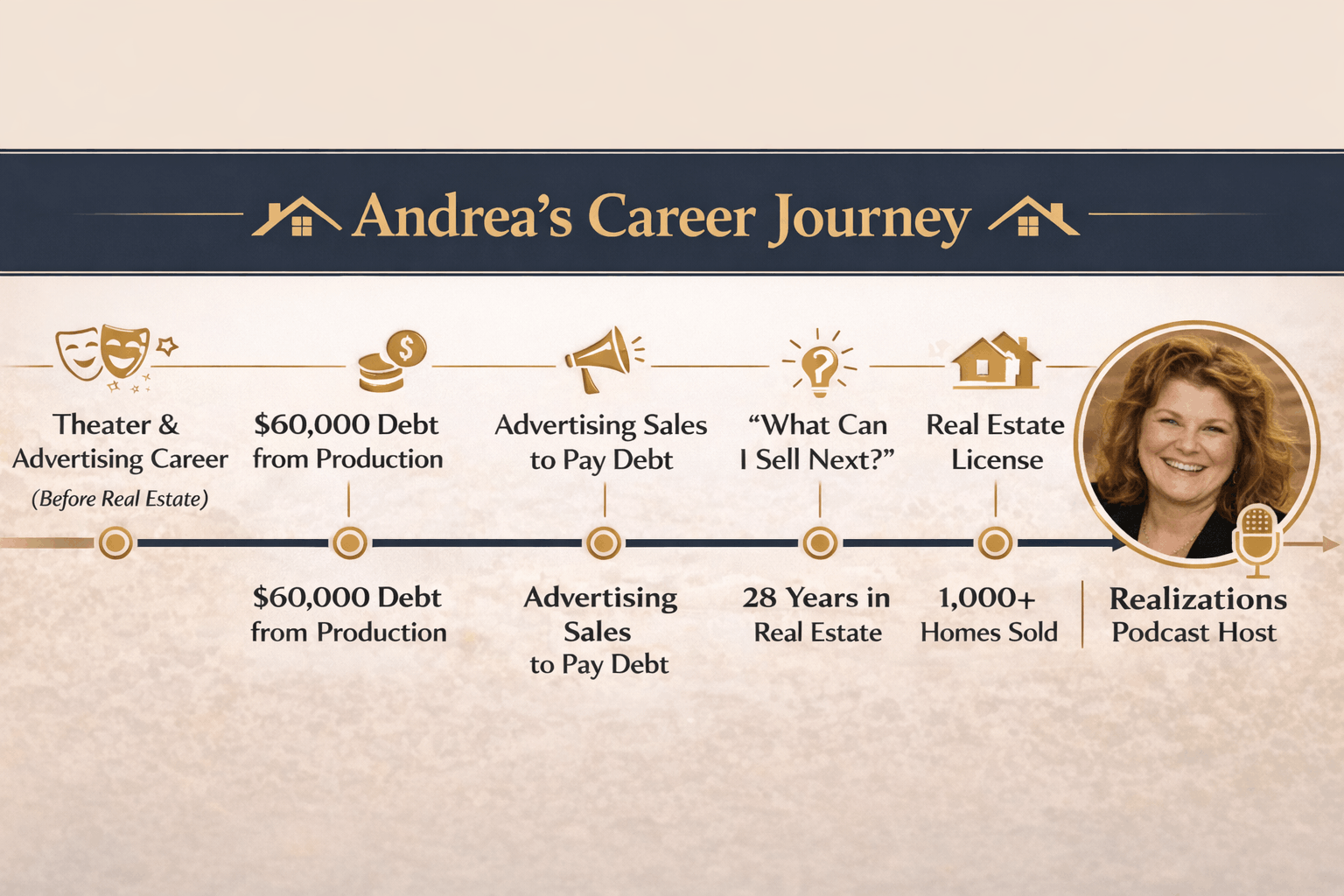
“I had a career in theater and advertising before real estate. At one point I owed friends and relatives over $60,000 after a production didn’t go well. I got into advertising sales to pay everyone back, and once I finished paying off that debt I asked myself what I could sell next. Eventually I landed on houses — and I’ve been selling them ever since.”
Andrea Gordon Career Journey Timeline
That sales experience gave her a massive advantage. She already knew how to handle rejection, how to follow up, and how to build relationships. When she moved into real estate, she brought those skills with her. You can connect with Andrea on Facebook to see how she engages with her community daily.
Authentic Branding in Real Estate
Andrea doesn't believe in pretending to be someone you're not. She believes your brand should reflect who you actually are. Her entire career demonstrates how Andrea Gordon real estate authenticity branding creates loyal clients who refer business for decades.
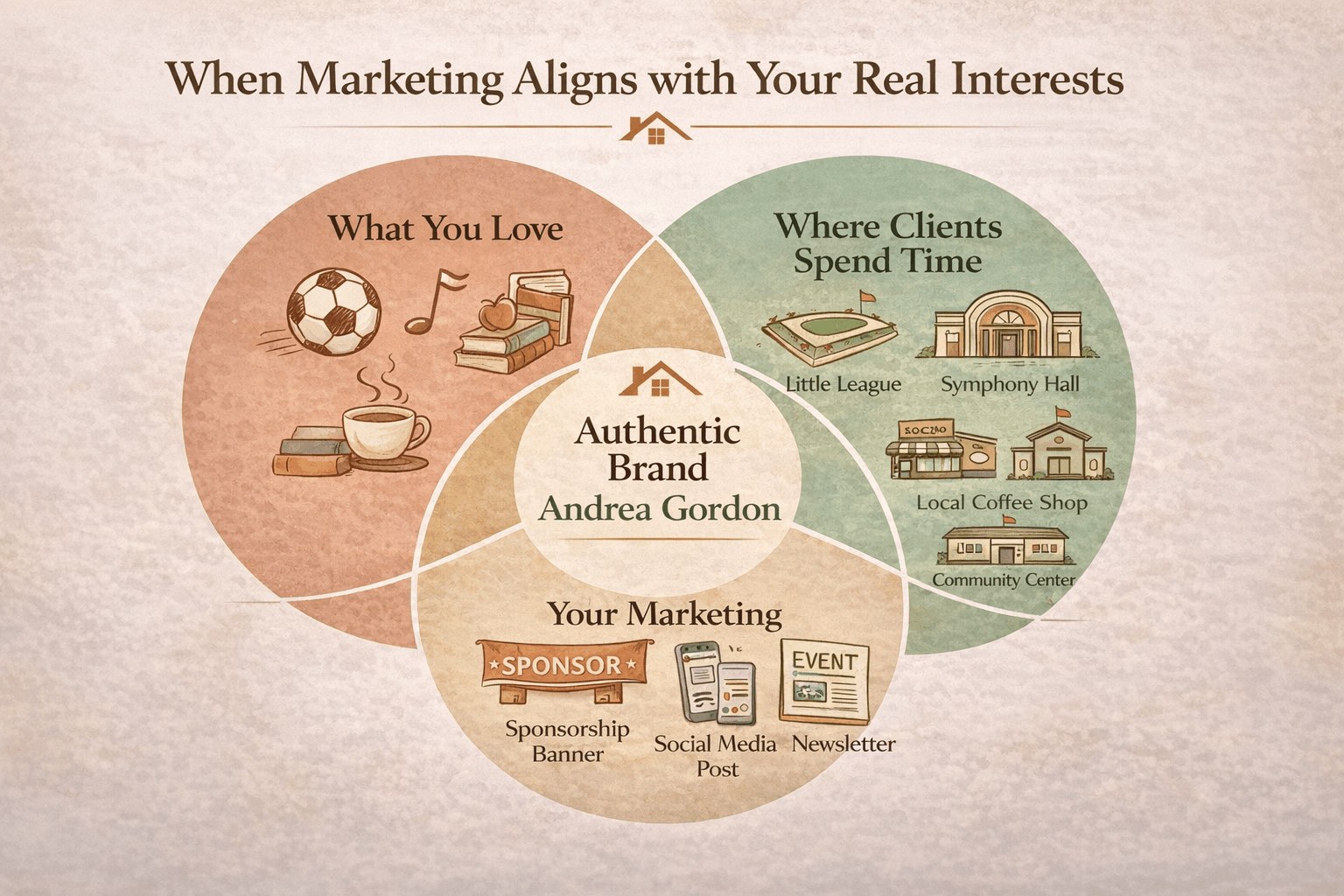
“When you figure out what your brand is, you have to commit to it. Think about what matters to you and where your ideal clients spend their time. If you love sports, sponsor the little league team. If you love music, support the symphony. When your marketing aligns with your real interests, the right clients will find you.”
This approach works because it removes the friction between who you are and what you project. Clients sense authenticity. When you show up as yourself, you attract people who actually want to work with you. Andrea's Instagram feed offers a perfect example of how she blends personality with profession.
Authentic Branding Alignment Diagram
According to the National Association of REALTORS® 2024 Profile of Home Buyers and Sellers, nearly 90% of buyers expressed satisfaction with their agent's honesty and integrity — proving that trust remains the foundation of this business. For more market data and trends, the National Association of REALTORS research page provides valuable insights you can use in your own marketing.
I wrote about this in more detail in my post Why Authenticity Wins in Real Estate, where I break down how genuine connection drives referrals.
Marketing During Market Downturns
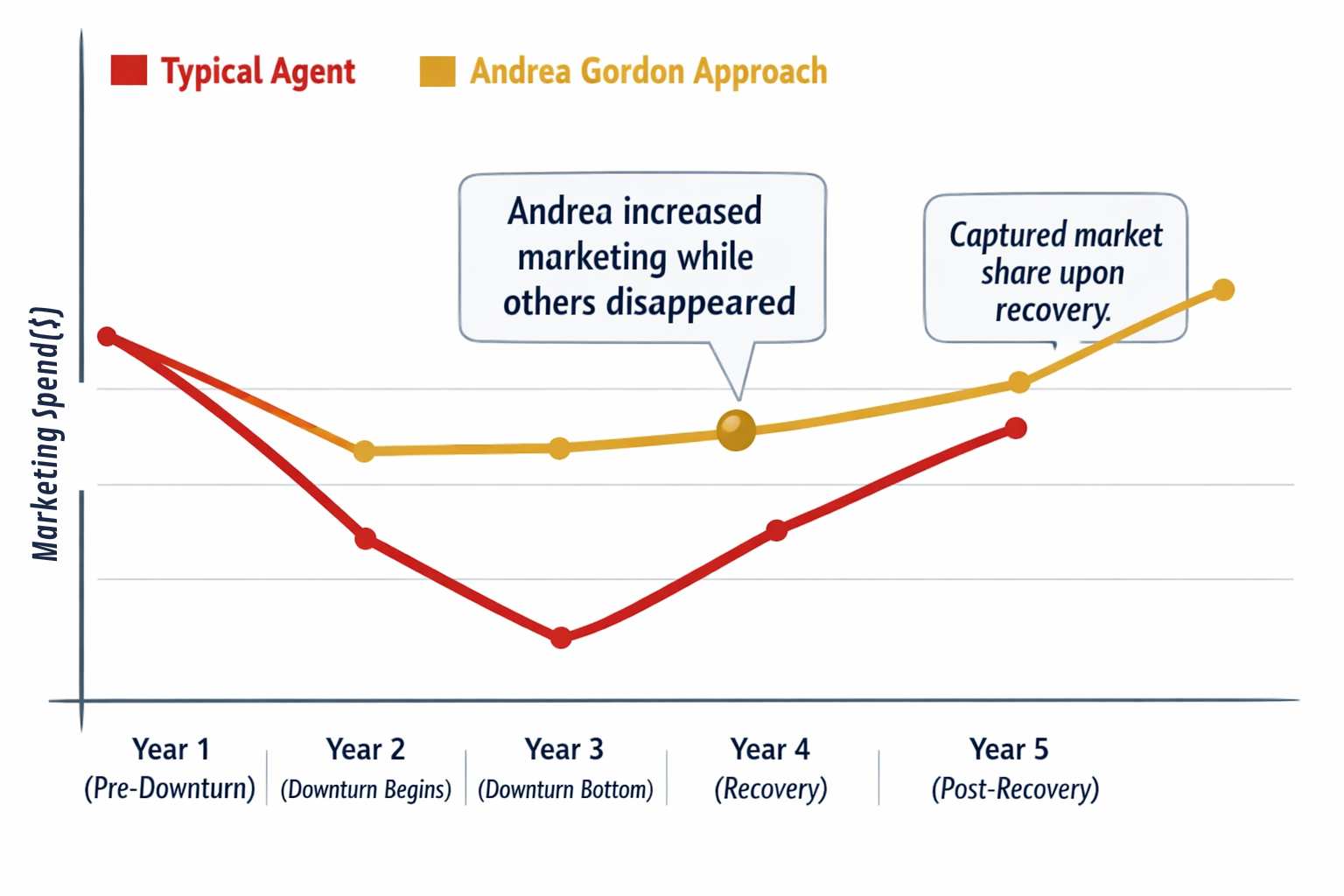
Most agents cut marketing when the market slows. Andrea does the opposite. Her approach to real estate marketing during downturns has kept her visible while competitors disappear.
“During the 2008 downturn, I actually increased my marketing spend. I knew that if I kept showing up while others disappeared, I would still be standing when the market recovered. Marketing forces you to believe in your own brand and reminds people that you’re still here.”
This isn't just stubbornness. It's a strategy. When competitors pull back, visibility gets cheaper, and attention gets easier to capture. The agents who vanish during downturns train their sphere to forget them. The ones who stay visible own the recovery. Andrea's LinkedIn profile shows how she maintains professional visibility even when markets shift.
Marketing During Downturns Strategy Chart
Why New Real Estate Agents Must Start Small
New agents often want the big listings right away. Andrea advises a different path.
“When you’re a baby agent, you’re probably not going to get the $3 million listing in the fancy neighborhood. Start small and learn the business. Work with buyers, build relationships, and grow your experience before jumping into high-end deals.”
Those small transactions teach you the fundamentals. You learn contracts, negotiations, and client management without the pressure of million-dollar mistakes. And here's the thing: today's first-time buyer is tomorrow's luxury seller.
For a deeper dive, check out my article First Year Success: What I Wish I Knew, which covers the exact systems I used to build momentum.
The Power of Follow-Up in Real Estate
Lead generation gets all the attention. Lead follow-up gets the results. Effective real estate lead follow up strategies separate successful agents from those who struggle.
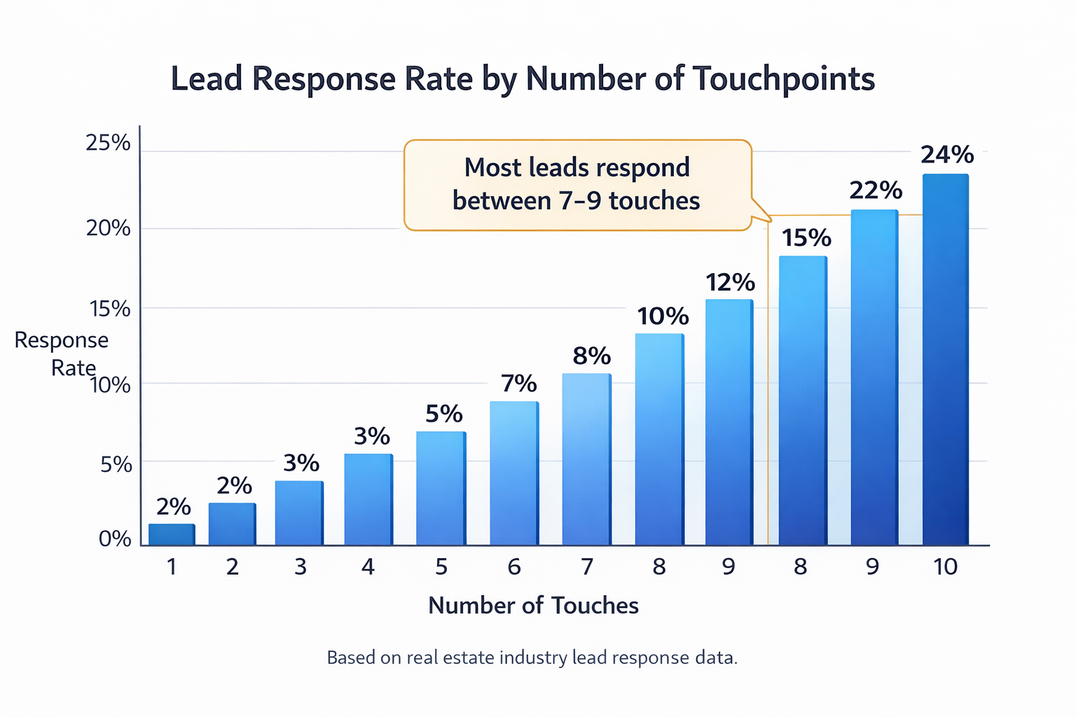
“Most new agents don’t follow up enough. If you call someone once and they don’t answer, that doesn’t mean the opportunity is gone. It often takes seven to nine touches before someone responds. The person who keeps following up is usually the one who gets the business.”
The real estate lead follow-up strategies that work aren't complicated. They're consistent. Call, email, text, send a note. Stay on their radar without being annoying. When they're ready, they'll remember who stayed in touch. For additional research on consumer behavior, the Pew Research Center offers useful data on how people prefer to be contacted.
Follow-Up Touchpoint Frequency Chart
Entrepreneurship in Real Estate
This might be the hardest truth for new agents to accept.
“When you become a real estate agent, you are an entrepreneur. It doesn’t matter which brokerage you work for. You are responsible for your marketing, your taxes, your health insurance, and your business. If you don’t take ownership of that, the business will not work.”
No one is coming to save you. No manager will hand you leads forever. You either build a business or you build a hobby. That mindset shift determines everything.
Scaling Through Delegation and Systems
Andrea built a career that spans three decades. She didn't do it alone. Understanding how new real estate agents get clients is important, but understanding how to keep them through systems matters even more.
“Once you can afford it, hire an assistant. If you’re stuffing envelopes or doing work someone else could do for a few dollars an hour, you’re wasting time. Your job is generating business and building relationships. Delegation is what allows your business to grow.”
How new real estate agents get clients matters, but how they keep them matters more. Systems create consistency. Delegation creates capacity. Together, they create freedom. Andrea discussed this extensively on her own Realizations Podcast, where she breaks down the systems that have sustained her career.
Creating Work-Life Balance in Real Estate
The agents who burn out aren't the ones working hard. They're the ones working without systems.
“The key to doing everything you want in life is systems. I meet with my team regularly, clear my email inbox every night, and plan my time carefully. When you structure your business properly, you can still have time for your personal life.”
Andrea proves that longevity in this business isn't about grinding yourself into exhaustion. It's about building structures that support both your career and your life.
The Truth About Feeling Like You "Suck" in Real Estate
Here's what Andrea wants every struggling agent to hear.
“No one actually sucks. Your behavior might need to change, but that’s something you can fix. If you break down the problem and focus on improving the behavior, you can absolutely turn things around.”
Separate your identity from your performance. A bad month isn't a bad career. A lost deal isn't a lost future. Look at the behaviors, fix what isn't working, and keep moving. That's how you build a business that lasts.
The Andrea Gordon real estate authenticity branding approach proves that long-term success comes from being genuine, staying consistent, and treating this like the entrepreneurial venture it actually is. For additional mindset resources, the American Psychological Association offers research-backed articles on how mindset affects performance.
Tune in to the full conversation with Andrea Gordon on the Why Do I Suck as a Real Estate Agent Podcast. We go deeper into how she built a three-decade career, the moments that nearly broke her, and the exact systems she uses to stay grounded while running a thriving business.
FAQ Section
1. Who is Andrea Gordon?
Andrea Gordon is a Bay Area real estate professional with nearly 30 years of experience and over 1,000 homes sold. She is also the host of the Realizations Podcast. Her philosophy of Andrea Gordon real estate authenticity branding has helped her build a career that spans three decades.
2. Why is authenticity important in real estate branding?
Authenticity helps agents connect with the right clients by aligning their marketing with their interests, personality, and values. This creates genuine connections that lead to long-term relationships rather than one-off transactions.
3. How many times should real estate agents follow up with leads?
Many sales experts recommend following up seven to nine times before expecting a response from potential clients. The key is consistent, valuable touches rather than aggressive pitching. These real estate lead follow up strategies require patience but deliver results.
4. What advice does Andrea Gordon give to new real estate agents?
Andrea recommends starting small, working with buyers, building relationships, following up consistently, and gradually scaling the business through systems and delegation. She emphasizes that agents must embrace their role as entrepreneurs from day one. Understanding how new real estate agents get clients starts with accepting that you are the CEO of your own business.
If you're ready to structure your own podcast, the podcast framework guide provides a step-by-step blueprint used by successful agents across the country. For similar conversations like this, visit the Take Action Realty Group website to explore past episodes and resources.
Apply to Be a Guest on the Why Do I Suck as a Real Estate Agent Podcast
Real estate is evolving. Markets are shifting. Capital is moving. If you're actively working in the industry and solving real problems—whether in construction, finance, brokerage, or development—we want to hear your story.
This podcast is produced by the Icons of Real Estate - #1 Real Estate Podcast Network. If you are a real estate professional, apply to be a guest speaker across the network.
