
Mark Dolan Time Tested Mastery Real Estate Coaching: 40 Years of Lessons on Selling, Mentorship, and Long-Term Success
Most agents enter real estate for the wrong reasons. We see the Cadillacs, the gold watches, and the seemingly easy lifestyle, and we think, "It doesn't look too hard." Mark Dolan, the founder of Mark Dolan Time Tested Mastery Real Estate Coaching, admits he started the same way 41 years ago. But he quickly learned the reality.
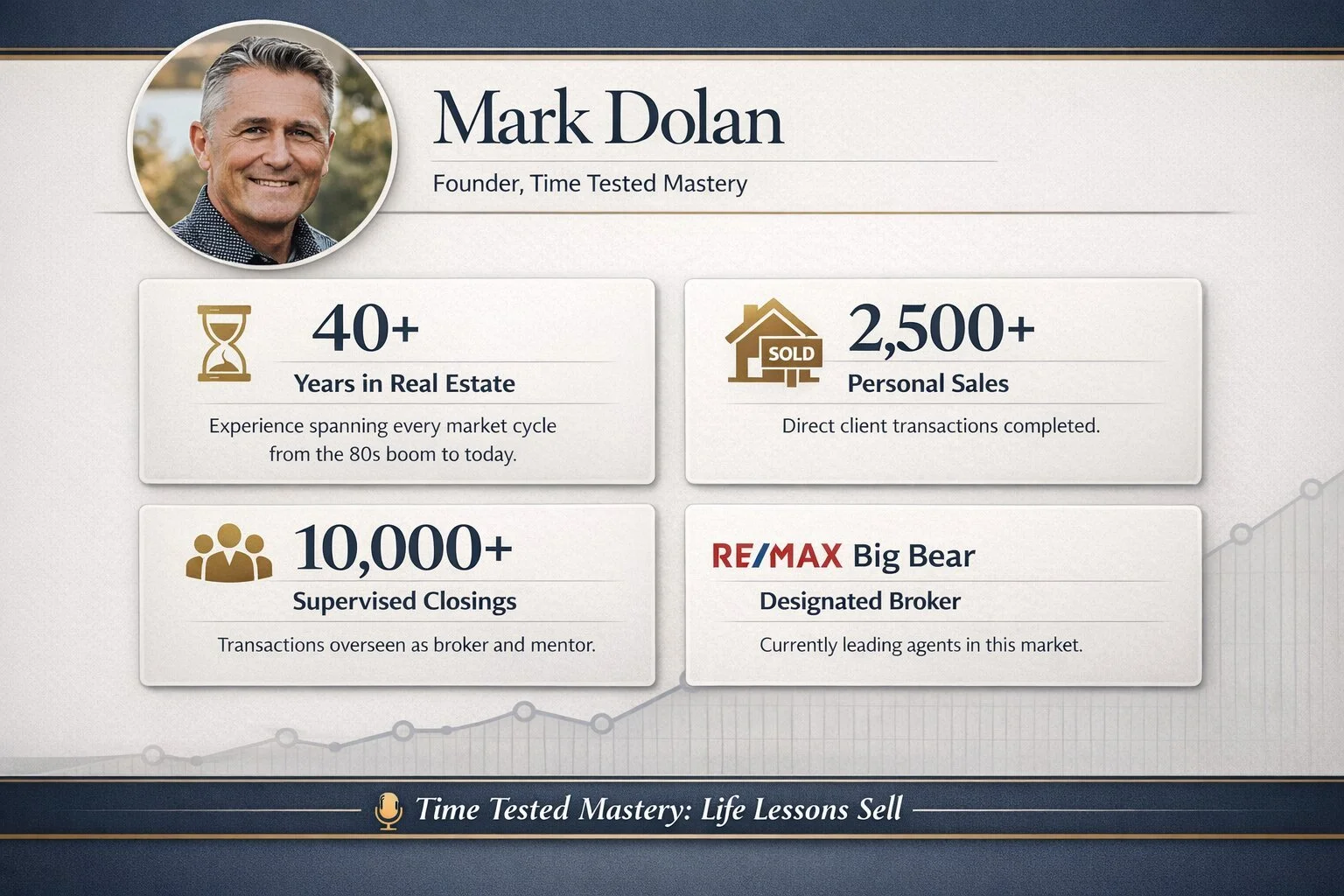
I sat down with Mark on the Why Do I Suck as a Real Estate Agent podcast to get to the heart of why so many agents struggle and what it truly takes to build a career that lasts. With over 2,500 personal sales and more than 10,000 supervised closings, Mark has seen it all.
What he shared about the mindset, habits, and skills that separate those who last from those who wash out is something every agent needs to hear.
Listen to the full episode: Essential Advice for Aspiring Real Estate Agents - EP 09
Why Unrealistic Expectations Are the Silent Career Killer
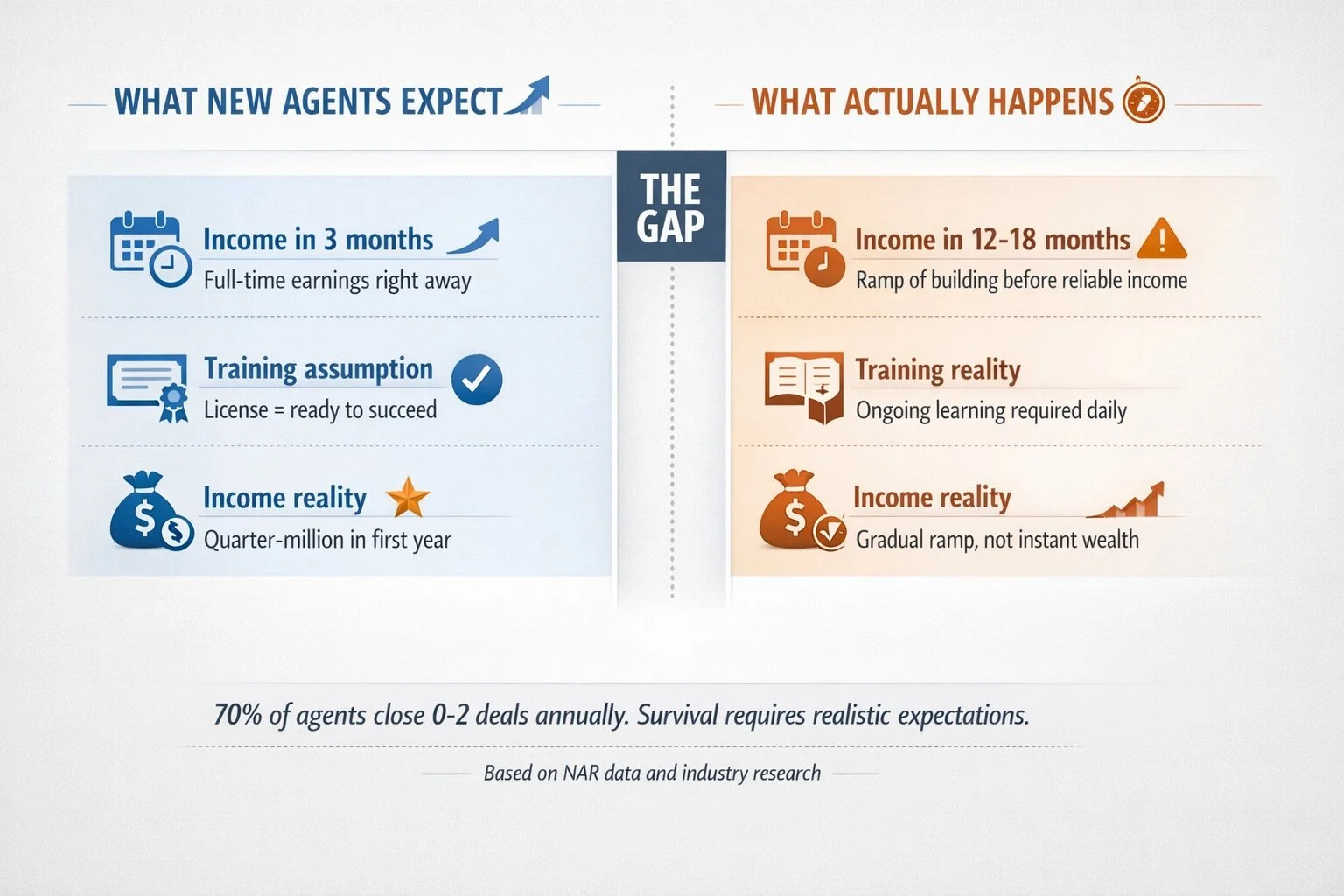
One of the first things Mark and I got into was the "expectation gap." When he started, the advice was simple: have six months of savings before you begin. But he's watched agents burn through that runway in three months and panic. They nod when you tell them the timeline, but internally they're thinking, "I'll be different."
That hit close to home. My previous broker told me to be prepared to eat for two years. I took that as a personal challenge, and it took me about 16 months of consistent seed-planting before I started to feel comfortable. Mark said his turning point was around 18 months. By then, he knew enough answers and, more importantly, knew where to go when he didn't have one.
The stats back this up. We talked about how roughly 70% of agents didn't close a single deal last year. According to data from the National Association of Realtors, the barrier to entry is low—a few hundred dollars and a couple of months of study—but the barrier to survival is high. Mark put it well: this business offers unlimited freedom and unlimited earning potential, but people confuse easy entry with easy success.
If you're a new agent struggling to find your footing, getting the right real estate sales training for new agents is non-negotiable. It's the foundation that allows you to build momentum beyond those first few lean months. At Take Action Realty Group, we prioritize this kind of foundational training because we've seen firsthand how it changes outcomes for new agents.
Comparison Chart: What New Agents Expect vs. What Actually Happens
How to Sell Without Pressure and Still Close
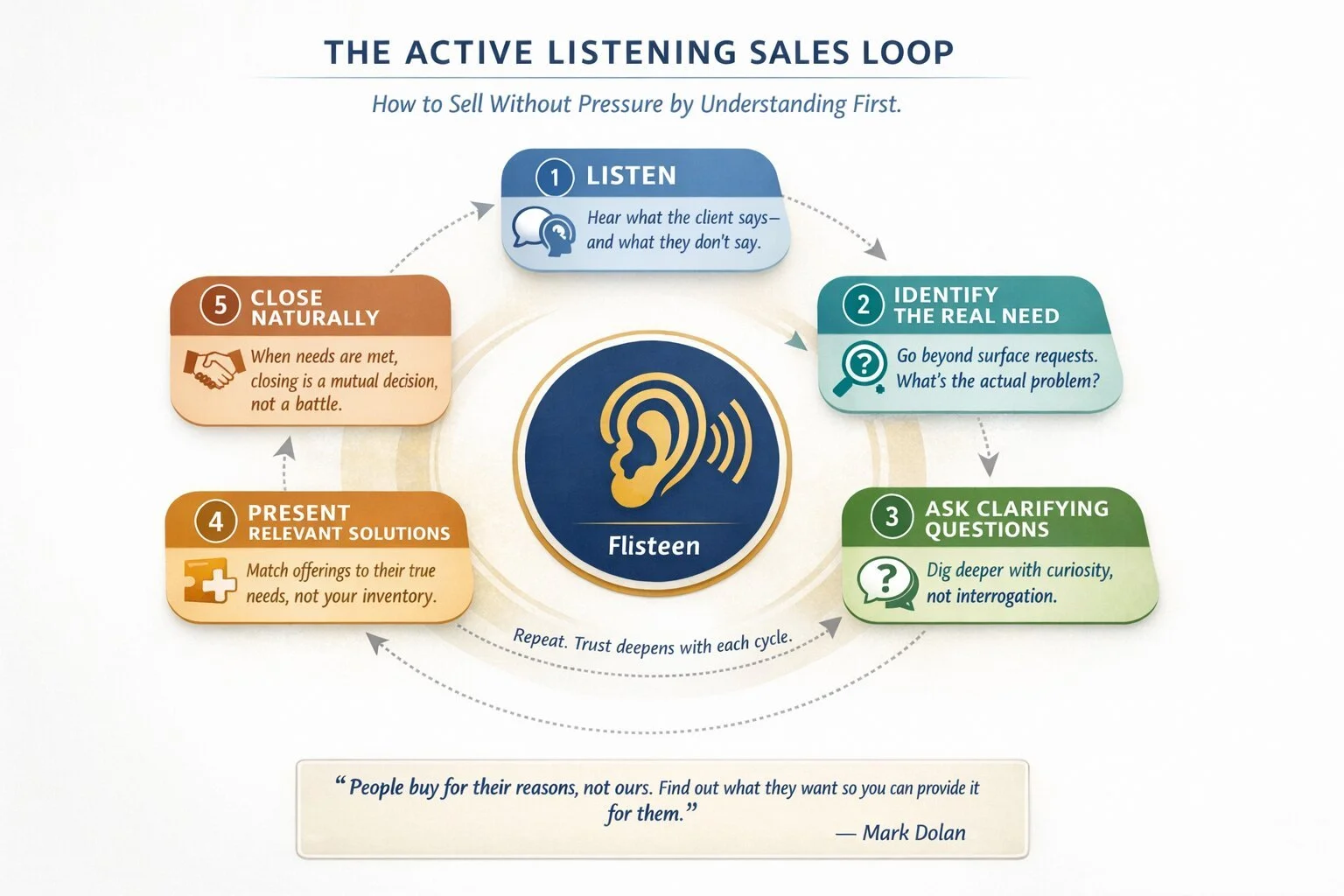
Mark referenced a book he read 40 years ago by Hank Tristler called No Bull Selling. The core idea stuck with him his entire career: people buy for their reasons, not ours. That single principle changed the way I think about client interactions.
The problem Mark sees—and I see it constantly with my agents—is that new salespeople walk into meetings and dump everything they learned in their first 30 days of training onto the client. They're trying to prove they're qualified. But what they're actually doing is talking past the client and feeding their own insecurity.
“People buy for their reasons, not ours. And so the key to helping somebody buy what they want is to find out what they want so you can provide it for them. Salespeople who talk too much and don’t ask questions have a real hard time selling.”
The fix is active listening. I've always believed that the most beautiful thing about real estate is that everyone can win if it's done right—seller, buyer, both agents, title companies, inspectors, lenders, everyone. But that only happens when you actually listen.
Mark and I talked about the example of a couple in their 60s downsizing from a million-dollar house. On the surface, someone might think, "Must be nice." But to that couple, this is a real problem they need solved.
If you assume they're going to pay cash for the first condo that pops up, you miss the fact that they want extra rooms for visiting grandkids or proximity to their children. That's a lost client and a lost referral. This approach to selling without pressure real estate is what builds a reputation for integrity and genuine care. We've covered this topic before when discussing attracting clients through authenticity, and Mark's advice reinforces the same timeless principle.
For more insights on building genuine client relationships, you can explore Mark's coaching programs, which focus heavily on this pressure-free approach to sales.
The Active Listening Sales Loop
The First Script Every Agent Should Learn
Mark shared the very first script he ever memorized, and it's one I've passed along to my own agents: "I don't know, but I'll find out."
That phrase changed the trajectory of his career. Every time a client asked him something he couldn't answer, he'd say those words, hang up, call his broker or a mentor, get the answer, and immediately follow up. Over 40 years, the things he "found out" became the foundation of his expertise. And he told me he still uses a version of it today.
“People don’t mind if you don’t know as long as you go find the answer and provide it to them. They would rather have an ‘I don’t know’ than a BS answer and find out you were wrong later.”
I had this exact conversation with one of my newer agents just yesterday. She's three months in, no deals yet, and she finally admitted to me that her issue is that she doesn't know what she's talking about. I loved that moment because it was the first time she got vulnerable. I told her: next time someone asks you a real estate question and you don't have the answer, just say, "I don't know. Let me call my broker and get right back to you." Her body language shifted immediately. She realized it really could be that simple.
When you're new, you suck at things. Mark compared it to learning to walk as a baby—you stagger, you fall, you get up, and eventually you run. Real estate is no different. You have to crawl before you walk. The agents who accept that timeline and commit to learning every single day are the ones who make it. This is where real estate mentorship and coaching proves its true value.
Research from the Bureau of Labor Statistics shows that agents who invest in ongoing professional development significantly outperform those who don't. Mark's approach through Mark Dolan Time Tested Mastery Real Estate Coaching is built on this principle of continuous learning and honest communication.
Mentorship and Building Your Support Team
Mark's career transformed while working for Tim Wood, a top broker. Over seven years, he gained invaluable experience by observing both effective practices and mistakes. He noted that those who offered the most advice often had the least business, while productive agents focused on their work. Mark learned to emulate the behaviors of successful colleagues.
I have received invaluable support from a title rep I've known for years. With three decades of experience, he not only provides answers but teaches me how to find solutions independently. This approach enables me to pass on that knowledge to my agents, emphasizing that my role is to work for them, as they pay me a split.
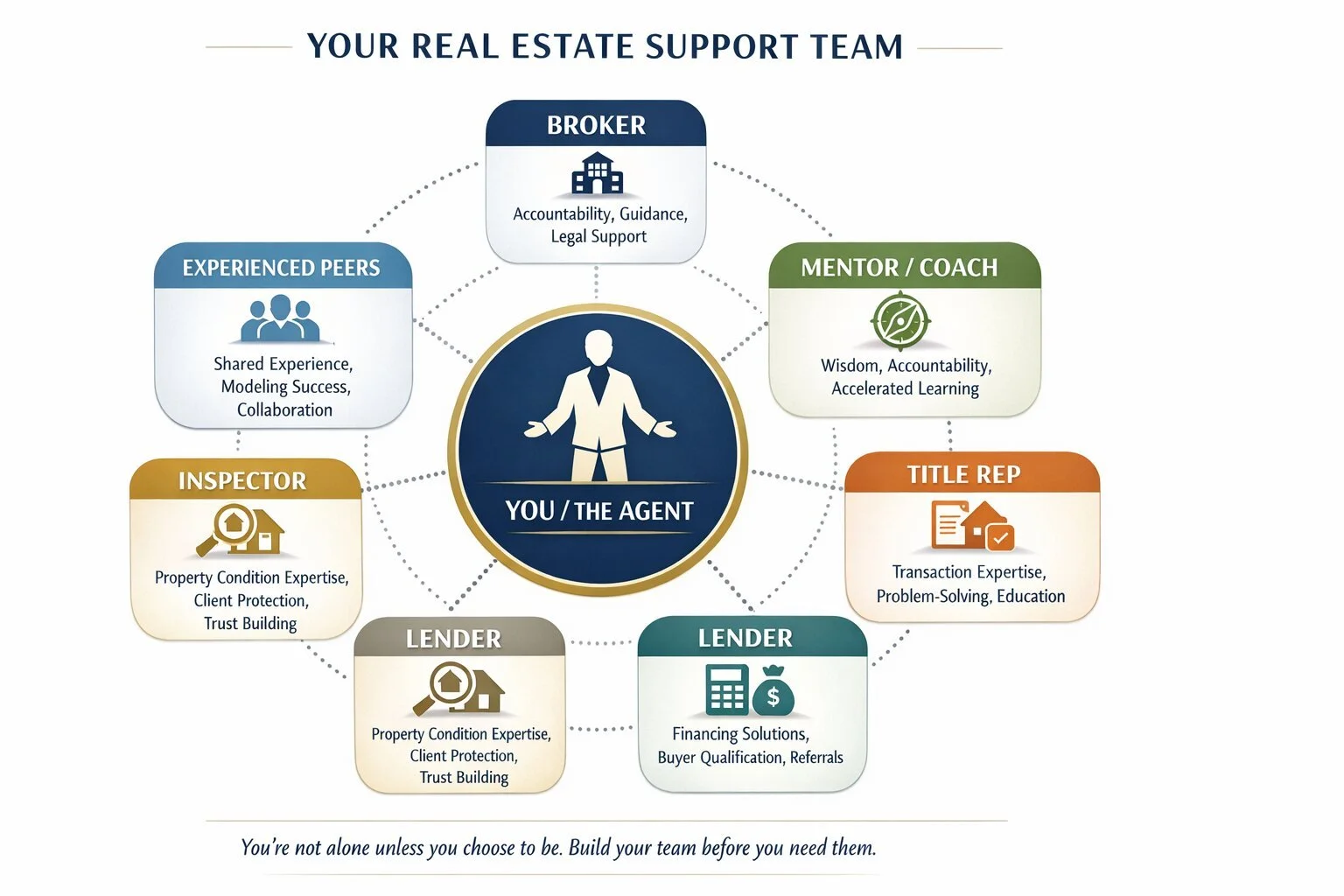
Starting in real estate doesn't mean you're alone. Seek a supportive broker and build relationships with title reps, lenders, and inspectors to form your team and shorten the learning curve. Embrace long-term thinking real estate career growth over quick profits to attract suitable mentors and partners. For more on building a sustainable real estate career, we've covered the mindset shifts that make the difference.
If you're looking for a brokerage that prioritizes mentorship, our team is built around supporting agents through every stage of their career. You can also learn more about Mark's approach to mentorship by listening to his podcast, Time-Tested Mastery: Life Lessons Sell, where he shares decades of wisdom with agents at every level.
Your Real Estate Support Team
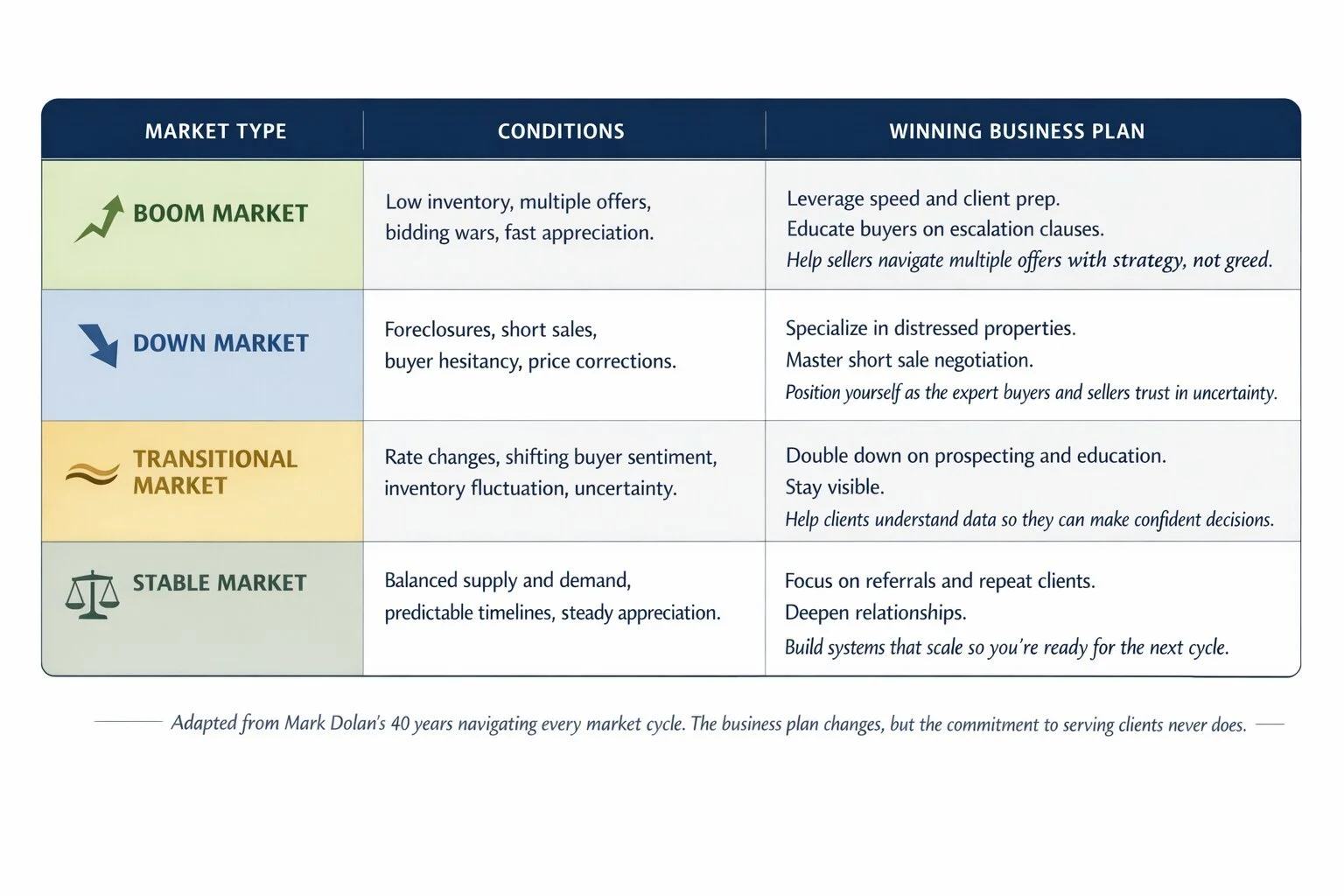
Adapting Through Market Cycles Without Losing Your Business
Mark has been through every type of market over 40 years—the building boom of the 80s, the downturn of the early 90s, the 2008 crash, the COVID frenzy. He told me that early in his career, everything he gained in his first three years, he threw back during the first down cycle. That lesson taught him not to repeat the same mistake.
His mentor told him something that stuck: don't let your expenses rise to your income. For real estate professionals, staying lean on debt is critical because markets will always cycle. But more importantly, Mark believes there's a business plan that works in every market—you just have to be willing to change your behavior to match the conditions.
During COVID, the business plan was hang on. In the early 90s, it was REOs. In 2008, it was short sales. The agents who wait for the market to "come back" to when they were successful are the ones who go out of business. This is why navigating real estate market cycles is a core skill for career longevity, not just a survival tactic.
This is where coaching and mentorship become essential. Mark sees coaching as most effective when it's implementation-based, not just information-based. He runs 90-minute Time-Tested Mastermind workshops where agents leave with a personalized script they can actually use—not 27 ideas they'll forget by tomorrow.
“Effective coaching means that it has to be implemented. It doesn’t just have to be delivered. It has to be implemented to be effective. We go to a training seminar, we get 27 different ideas, we walk out, and maybe we do one, or maybe we forget, and we don’t do any of them.”
Being coachable also means trusting the person giving the advice enough to try it before you discount it. Mark sees agents shop around for the answer they want to hear instead of acting on the answer they need to hear. That's a trap.
To dive deeper into market cycle strategies, you can explore resources on Mark's website or check out his LinkedIn profile, where he regularly shares insights on adapting to changing market conditions.
Market Cycle Strategies
What Changed for Me After This Conversation
Talking with Mark reminded me that success in this business comes from long-term thinking. Naming my brokerage, Take Action Realty Group, serves as a daily reminder to stay accountable. I plan to adopt Mark’s philosophy of “I don’t know, but I’ll find out” for new agents, emphasizing resourcefulness over perfection. This mindset shift is crucial.
The other thing that stuck with me is Mark's point about watching the productive agents, not the ones with the most free time. I'm going to be more intentional about connecting my newer agents with the right mentors—people who are actually in the field closing deals, not just sitting in the office giving opinions.
If you're serious about building a career that lasts, I can't recommend Mark Dolan Time Tested Mastery Real Estate Coaching enough. His 40 years of experience offer a blueprint for agents ready to stop struggling and start succeeding. Whether you're looking to buy your first home or sell a property, the principles Mark teaches apply to every transaction. For agents in our local market, we've seen incredible results when agents combine Mark's coaching principles with the support systems we've built.
Would you like to hear my podcast with Mark Dolan, where he discusses the mindset and scripts for success? He explains why many agents quit before truly giving themselves a chance to succeed.
FAQ Section
1. How long does it take to start making money in real estate?
Most agents need 12 to 18 months of consistent effort before they start seeing reliable income. Mark Dolan and I both experienced this—he hit his stride at 18 months, and I was at about 16 months. The standard advice is to have at least six months of savings, but you should mentally prepare for a longer runway.
2. What is the best first script for a new real estate agent?
Mark's go-to is simple: "I don't know, but I'll find out." It removes the pressure to have every answer and builds trust with clients because you're being honest. The key is to actually follow up quickly with the correct information every single time.
3. How do real estate agents stay successful during market downturns?
According to Mark, the agents who survive downturns are the ones willing to change their business plan to match the market. That might mean pivoting to REOs, short sales, or doubling down on prospecting. Keeping expenses low and staying connected to coaching or mentorship groups also helps you adapt faster.
4. Where can I find real estate coaching programs that actually work?
Programs like Mark Dolan Time Tested Mastery Real Estate Coaching focus on implementation, ensuring you walk away with practical scripts and strategies you can use immediately. You can learn more about Mark's programs on his website or by connecting with him on Facebook.
Apply to Be a Guest on the Why Do I Suck as a Real Estate Agent Podcast
Real estate is tough. Markets shift. Agents burn out. But the ones who stick around and figure it out have stories worth sharing.
If you're actively working in the industry—whether you're a broker, team leader, coach, investor, or agent who's figured out something that works—we want to hear from you. Come on the show and help the next generation of agents stop sucking faster.
*This podcast is produced by the Icons of Real Estate - #1 Real Estate Podcast Network. For more resources on growing your show or refining your message, explore the podcast framework and read success stories from other industry professionals who have leveraged this platform or apply to be a guest across the network.
