
Tony Ray Baker, Tucson Realtor: Lifestyle First, Referrals Second, Systems Always
Tony Ray Baker once told his mother that real estate agents were "the worst of the worst, besides used car salespeople." Two days later, he quit a six-figure job to become one. When this Tucson Realtor sat down with me on the *Why Do I Suck As a Real Estate Agent* podcast, I expected tactical advice from a top 1% agent with 30 years in the business. What I got was a blueprint for building a high six-figure career around the life you actually want, powered entirely by referrals and systems.
I called Tony from Take Action Realty Group in Green Bay while he was sitting in Tucson sunshine, and the real substance came fast: an agent who hasn't cold called anyone in three decades, runs five businesses, takes months off each year, and still closes $25 million in volume.
You can find Tony on Facebook, Instagram, and YouTube.
Who Is Tony Ray Baker?
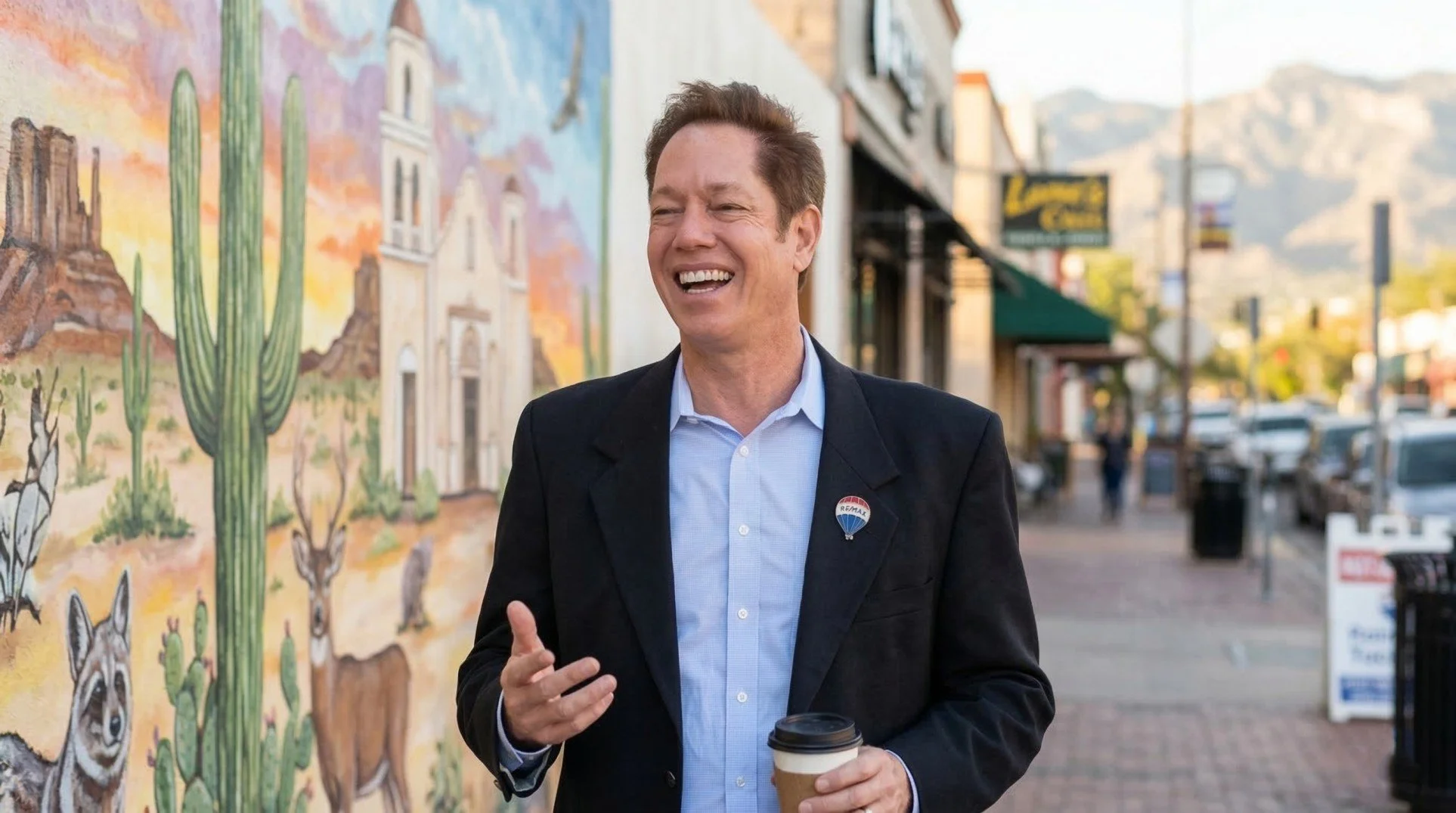
Tony Ray Baker has been a full-time REALTOR since 1994. His designations span residential, historic, investment, and luxury markets. Outside of real estate, he operates a trolley tour company, a non-profit art gallery, and a real estate investment company. He leads his team at RE/MAX Professionals.
His origin story is one of the best I've heard on this show. Tony had spent seven years in college, bouncing between psychology, law, architecture, and design, when his mother finally suggested real estate. His reaction was immediate:
“I love learning, so I was pursuing college for way too long. I was doing psychology and law, which are very left-brained, and then I was doing architecture and design, which are very right-brained. After seven years, my mother said to me, “Why don’t you be a real estate agent?” I actually got into a fight with her. I said, “What is wrong with you? Those are scum people. I’m not going to be in that profession. That’s the worst of the worst, besides used car salespeople.” Back then, the reputation of a real estate agent was even worse than today, if you can believe that.”
Two days later, he realized she'd been right all along. Every component he loved, including the fact that he'd always been the number one sales guy in his commission-based jobs, pointed directly to real estate. He quit that six-figure job in 1994 with two weeks' notice and dove into real estate school.
The First-Year Failure That Changed Everything
Tony made zero dollars his first year. He went into what he described as a "panic attack" and stopped trying to sell altogether. Instead, he spent every day in class, pursuing designations like GRI and CRS while his broker pressured him to start cold calling and door knocking. Tony asked for one more year, and they agreed.
His reasoning stuck with me. The values he grew up with, watching his father work by referral for 40 years, made the industry's standard playbook feel wrong at a gut level. Cold calling and chasing newspaper ads didn't fit his soul, and he refused to do it.
“I felt that in order to take care of a client, I had to be worthy of them. Why would you hire me, the new kid with no experience, instead of an expert? To overcome that, I went back to school. I told my brokers I was going to build a referral business. I wasn’t going to door knock or cold call. I wanted people to revere me for what I know and come to me like they would a great lawyer or doctor. They all laughed at the time, but I stuck to my guns.”
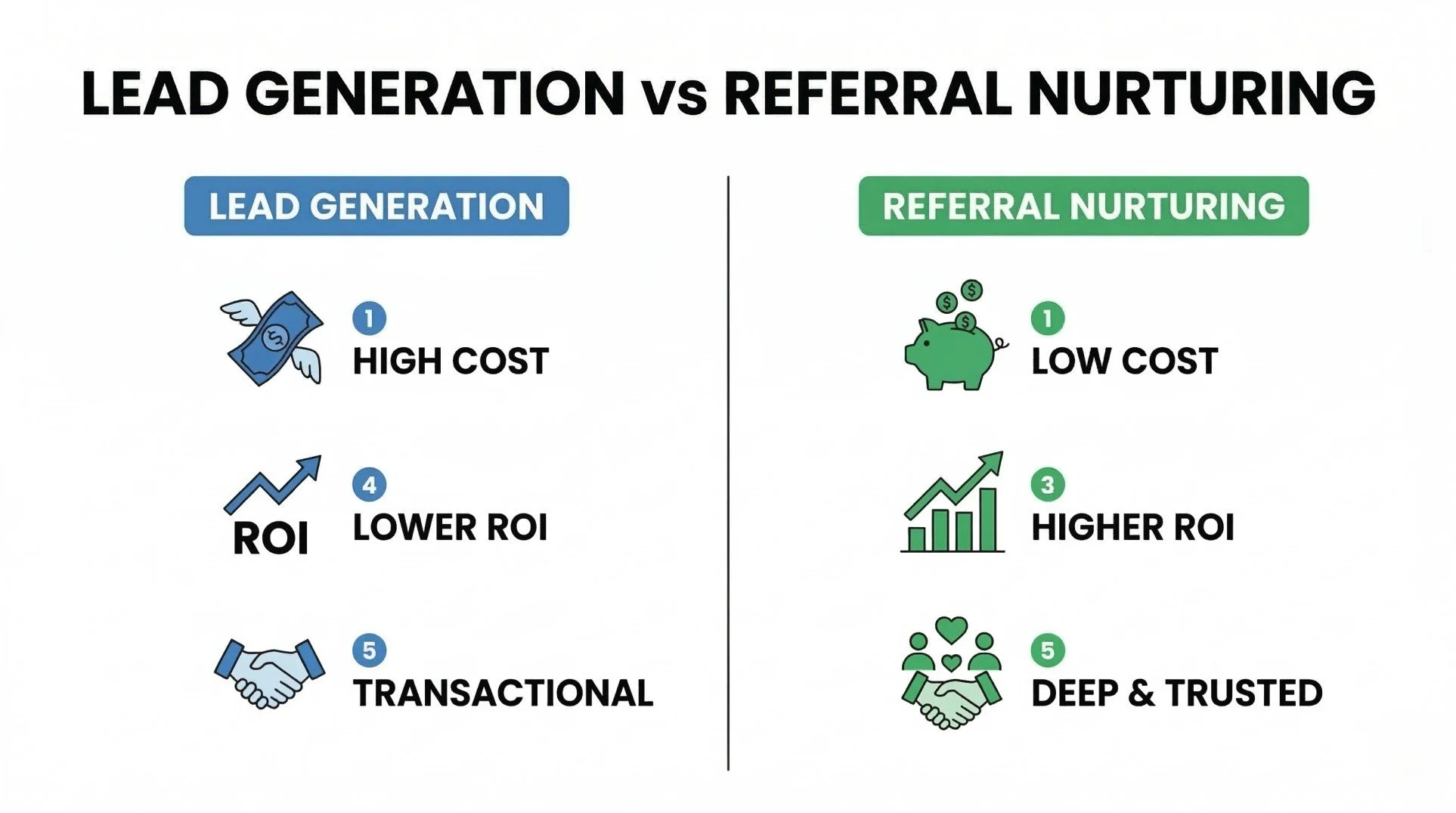
By 1995, referrals started coming in, and his ROI was through the roof compared to agents dumping money into lead generation. I've lived the opposite: early in my career, I hired a company to send me leads that were supposedly "warmed up." It cost me roughly $20,000 and produced nothing. That kind of loss stings hard when you're making zero.
Lifestyle Planning Comes Before Business Planning
Most agents write a business plan and then try to squeeze a life into whatever's left. Tony flipped that order, and it's the reason he's maintained work-life balance in real estate for three decades without burning out.
Mindset is everything. Once you identify your values and the business you want, the second priority is identifying the life you want first. For me, that meant working Monday through Friday, 9 to 5. No weekends. Six vacations a year. Thirty days in Europe every year. I wanted people to come to me.
His lifestyle intention includes specific, non-negotiable boundaries:
Monday through Friday, 9 to 5 only
No weekend work
Six vacations per year
30 days minimum in Europe annually
Clients come to him on his terms
Tony told me a near-death experience in his twenties, where he actually said goodbye to family and friends, permanently changed how he thought about time. After that, every business decision had to pass one test: does it fit the lifestyle goal? Brokers focus on business planning, but Tony argues lifestyle planning should be the priority. Then conviction, clarity, and the right numbers follow naturally.
For agents worried about burning out, this framework is the starting point. I explored this same theme with another agent who rebuilt balance after burnout.
The ROI Trap — Why Volume Isn't Always Profit
Tony warned me about something that doesn't get discussed enough: agents chasing high transaction counts while losing money once real costs are factored in. The math can be brutal, and the financial missteps newer agents make often compound over years.
| Expense Category | Typical Range |
|---|---|
| Referral fees (when buying leads) | 30–50% of commission |
| Business expenses and overhead | 30–40% of remaining |
| Taxes | Applied on top of everything |
Tony described agents who don't know their numbers as "washing dollars," spending more than they bring in while thinking they're building a career. This is exactly why buying leads hurts profit for so many agents: the volume looks impressive on paper, but a lean, referral-based business with no lead-generation spend can net more than a high-volume team drowning in expenses. I broke this down further in our investor-friendly agent guide.
The Referral Machine System
Tony's business runs on a CRM built for referral nurturing. His part-time assistant has managed it for 30 years, and the system handles most client communication automatically. If you're looking for the best real estate CRM for referrals, his setup is worth studying.
The core components:
Client intake form feeds directly into the CRM
Monthly auto-fired emails deliver non-real-estate value content
Personalized birthday messages go out automatically
Postcards and newsletters ship on schedule
Facebook retargeting for Realtors keeps posts visible to existing clients
“I have a CRM focused strictly on nurturing referrals. I have a part-time assistant who has worked for me for 30 years. We have an intake form; she uploads the client, sets them up in the CRM, and it auto-fires monthly emails that aren’t even real estate related, more like “Chicken Soup for the Soul” content. It handles birthdays and auto-fires postcards and newsletters.”
Tony uses what he calls "stalker ads" to ensure his existing clientele actually sees his posts, spending a few dollars to target the people who already know him.
Research on social media usage across age groups supports his logic: the average first-time buyer is in their 40s to 60s, and the average move-up buyer is 61. Those people are on Facebook, not Instagram. Agents looking to build similar content systems can see how professional production works on the Icons of Real Estate podcast production page.
Stop Chasing Strangers — Start Nurturing Your Sales Force
The line from Tony that I keep thinking about has nothing to do with technology or systems. It's about who your real audience should be.
“The biggest mistake is not going after the people who already love and trust you. That is your sales force. You need a plan to nurture those relationships authentically. Not just getting “likes” on social media, but having lunches and being part of their lives. That authenticity is going to be the win for the next decade, especially with AI.”
He's right, and I see it with agents every day. The ones building real businesses aren't chasing cold audiences through vanity metrics. They're showing up at dinners, remembering names, and staying present.
Tony takes this further with his art gallery and trolley tour company. He can invite 125 people to a client party or take them on a mural tour on his trolley bus. He calls it a "Tony Ray bubble" — he keeps adding what he loves and attracting people who want in.
Compartmentalization & Systems Create Freedom
Tony's answer to how to run multiple businesses is straightforward: compartmentalize and automate. He runs five simultaneously, including a real estate team, a trolley tour company, a non-profit art gallery, a real estate investment company, and an AI education practice. His systems keep everything moving without him involved in every decision.
The proof is in the results. This past year, he was essentially off for four to five months due to moving three business locations, having eye surgery, and traveling through Ireland, Scotland, and London. His team still closed approximately $25 million in volume. That's automation and delegation at work.
AI Will Enhance — Not Replace — Realtors
Tony teaches AI to real estate agents through his AI Real Estate CoLab, a private Facebook group where he covers how to use AI in real estate every month. His recommendations are specific:
Gemini Pro ($20/month): For professional and business tasks, because Google's cloud infrastructure and organic search integration give it a structural advantage
ChatGPT ($20/month): For personal communication, where its conversational strength shines
Train your AI: Tell it who you are, what your businesses are, and what hat you're wearing today
“If you’re using it properly, it makes the agent more efficient and increases productivity. You can use it to be more communicative with your clientele. Responses and education create authority, and people are looking for authority more than ever. Using AI gives us more time to be with people and be authentic”
The practical takeaway for AI tools for real estate agents: use the technology to handle routine communication and content generation, then reinvest that time in face-to-face relationships. Tony's team kept producing during his months away because their AI and CRM systems maintained client touchpoints without him.
The Buyer/Seller Split — A Game-Changing Shift
Tony Ray Baker, Tucson Realtor and seller specialist, made the structural decision to split buyer and seller responsibilities on his team. He handles sellers; his partner handles buyers. Anything requiring a vehicle became his partner's job.
Tony described trying to juggle both as "very jarring to the brain." The constant scheduling conflicts and mental overload of context-switching between listing appointments and buyer showings were draining his focus. Once he let go of the buyer side, his schedule became predictable and his listing business got stronger.
This isn't feasible for every agent, especially solo practitioners just starting out. But it's worth noting as a structural goal: time blocking for Realtors works best when you're focused on one side of the transaction. You can see how our team structures around the same principle.
Final Advice for Struggling Agents
Tony's closing advice was the simplest and most direct thing he said in our entire conversation: sit down and do a "lifestyle intention." Then build your business plan around that. Include vacations. Include family time. Put boundaries on paper before you write a single revenue target.
That's the playbook from Tony Ray Baker, who hasn't cold called anyone in 30 years and still closes $25 million annually. Design the life first. Then build the business that fits inside it.
If you've got a story like Tony's and want to share it with other agents, apply to be a guest speaker on one of the shows in our network.
Frequently Asked Questions
Who is Tony Ray Baker?
He is a REALTOR based in Tucson with over 30 years of experience in residential, historic, investment, and luxury real estate.
How do you build a referral-based real estate business?
He invested his first year earning designations like GRI and CRS, then built a CRM-driven system focused on nurturing existing relationships instead of buying leads or cold calling.
What is lifestyle planning for Realtors?
Lifestyle planning means identifying the personal life you want, including schedule, vacations, and boundaries, before writing your business plan. The business gets designed to fit within those parameters.
Why do some real estate agents make high volume but low profit?
Referral fees of 30–50%, business expenses of 30–40%, and taxes can consume most of an agent's commission, leaving high-volume agents with thin margins after costs.
How can Realtors use AI effectively?
Tony recommends Gemini Pro for professional tasks and ChatGPT for personal use, focusing on AI to increase efficiency and free up time for authentic client relationships.
Should agents stop buying leads?
Tony's experience shows referral-based growth produces higher ROI than purchased leads. Agents spending heavily on lead generation should evaluate whether that spend translates to actual profit.
What CRM works best for referral businesses?
A CRM focused on referral nurturing with automated value emails, birthday messages, postcards, and newsletters. The system should maintain relationships, not capture cold leads.
How can Realtors avoid burnout?
By planning lifestyle first and business second. Tony works Monday through Friday, 9 to 5, takes six vacations annually, and has maintained this schedule for three decades.
Is cold calling necessary in real estate?
Tony built a top 1% career without cold calling or door knocking. Referral-based strategies can outperform traditional outreach when backed by strong systems and authentic relationships.
How do top agents structure their time?
Tony compartmentalizes daily tasks across his five businesses, uses automated CRM systems for routine communication, and delegates all buyer-side work to his partner.
This podcast is produced by the Icons of Real Estate - #1 Real Estate Podcast Network
Apply to Be a Guest on the Why Do I Suck As a Real Estate Agent Podcast
Tony Ray Baker, Tucson Realtor for 30 years, shared the systems behind his career on this episode. If you've built systems that work, survived the first-year struggle, or found a way to balance growth with quality of life, other agents need to hear your story.
